
I’ve got three questions. First: where is the line between real information and 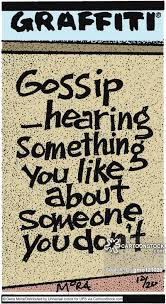 gossip on television news programs? Second: who is the audience that the networks appear to cater to? Third: how do we
 ‘drag the line’ back to real stories and away from gossip?
Those are the questions I ask myself just about every time I’m forced to watch any level of network television news programming. My husband loves mid-day and afternoon, locally-produced broadcasts and the ABC Nightly News with David Muir. All of it, as he well knows, is  garbage in my humble opinion. For every ounce of real information – presented in bit-sized pieces that really don’t tell you much of anything – you get six ounces of petty gossip, feel-good stories about small children or
  animals, and detailed stories about bad things happening to celebrities.
Which brings me to the second question – who is the audience that network shows aim to attract? A scan of online sources makes it clear: it’s for  old people. You get a hint of this with the ads – they’re all for
  drug companies, and are marketing drugs that old people are likely to use. So if the audience is old people, it would seem to me that networks would put real news into their half hour broadcasts – right? At least in theory, old people would have a longer
 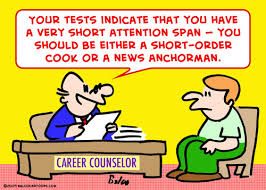 attention span than the young folk, right? Apparently not. According to the State of the Media website, as of 2012, there was only 19 minutes of content on the half hour news program. That means there’s 11 minutes of commercials. And of the 19 minutes of information-sharing, I’d estimate only about 40% of that could be considered anything close to news, versus fluff and petty gossip. So for an investment of 30 minutes of your time, you get about 10 minutes of substance. That’s really pathetic.
I force Erik to watch the first half of the  PBS Newshour, which provides 25 minutes of real information and commentary on things that I believe are important to the country. Why only 25 minutes? Because he insists on switching over to ABC, for ‘news-lite’. I find the PBS information often leads to meaningful conversation between us, as opposed to the consistent-format fluff from ABC. So for the benefit of us older folks, why can’t the networks provide content more like public television news? One network is trying.
CBS made a change in 2013, both with its morning shows and evening news. They added  Charlie Rose to the morning lineup, and Scott Pelley took over the nightly news.
The to pics are weightier on both programs, compared to the other two network offerings. And the result? CBS is in third place in both morning and evening broadcasts. What does that tell me? Old folks like the  garbage they’re being fed. Sigh.
How do we drag the line back to more brain food and less  fodder? There’s always on-line news from on-line print media like The New York Times, Politico, The Atlantic and The New Republic. And I’ll try to persuade Erik to at least switch to CBS for his morning and evening entertainment. It’s a step in the right direction…maybe. Or maybe CBS will realize they’re fighting a losing battle, and go the way of the others with fluff and nonsense. If so, can I cancel my cable subscription and be done with it? We’ll see.