
This from Karim Sadjahpour and Jack Goldstone in The Atlantic. As we’ve discussed, likely Iran is just some years ahead of US and our crash, with all the conditions met but the last (favorable international relations).
When the five conditions coincide—economic strain, alienation and opposition among the elites, widespread popular anger at injustice, a convincing shared narrative of resistance, and favorable international relations—the normal social mechanisms that restore order in a crisis are unlikely to work. The society’s equilibrium has been profoundly disrupted and can easily tip into escalating popular revolts and open elite resistance, producing a revolution.
The Islamic Republic is today a zombie regime. Its legitimacy, ideology, economy, and top leaders are dead or dying. What keeps it alive is lethal force. The most important element still missing from a full revolutionary collapse is the repressive forces deciding that they, too, are no longer benefiting from, and hence no longer willing to kill for, the regime. Brutality can delay the regime’s funeral, but it’s unlikely to restore its pulse.. This is what Ishmael opined about their comments:
Based on the new information, the crisis in Iran is deep and multi-dimensional.
The converging crises in Iran can be broken down into four key areas, which collectively create a distinct, volatile situation.
🔥 Anatomy of the Crisis in Iran
Internal Unrest & Regime Survival
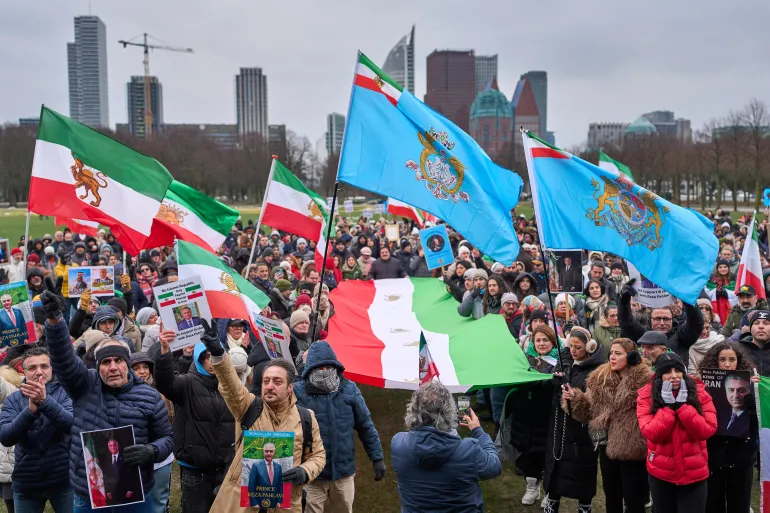
· Scale of Protests: Iran is facing one of its largest and most widespread protest movements in years, fueled by economic collapse. Demonstrations have spread to all 31 provinces, with reports of hundreds of protests in a single day and clashes so intense they are being treated as an “insurgency” in some areas.
· Severe Regime Crackdown: The government has responded with a nationwide internet blackout, mass arrests (over 2,000), and lethal force, resulting in dozens of deaths. In a significant escalation, the regime has deployed its most hardline military unit, the Islamic Revolutionary Guard Corps (IRGC) Ground Forces, to suppress protests—a move reserved for extreme threats.
· Existential Challenge: Multiple analysts conclude the Islamic Republic’s power is fundamentally eroding. One states plainly there is “no scenario in which the Islamic Republic survives 2026 with its power intact”. The protests have evolved from economic grievances to open chants for regime change.
Economic & Environmental Collapse
· Hyperinflation & Shrinking Economy: The national currency has halved in value, with annual inflation predicted to rise towards 60%. The World Bank projects the economy will shrink in both 2025 and 2026.
· “Thirst-Driven” Protests: Beyond the economy, a profound environmental and water crisis is a major stressor. Analysts warn the next wave of regional protests will be driven “by the thirsty”.
External Geopolitical Pressure
· “Maximum Pressure” Sanctions: The U.S. maintains “maximum pressure” sanctions, specifically targeting Iran’s “shadow fleet” of oil tankers and facilitators. The recent capture of a key tanker (the Bella 1/Marinera) demonstrates this enforcement.
· Military Threats & Weakened Proxies: The U.S. and Israel have conducted direct strikes on Iran’s nuclear program. U.S. President Trump has explicitly threatened intervention if Iran kills protesters and warned of consequences if it rebuilds its nuclear program. Concurrently, Iran’s regional network of proxy militias (its “Axis of Resistance”) has been significantly weakened.
· The “Venezuela Precedent”: The capture of Maduro has sent a shockwave through Tehran, putting the regime “in a catch-22” regarding protest suppression. The U.S. action is seen as a credible warning.
Nuclear Crossroads
· Following military defeats, there is analysis that the regime sees a nuclear weapon as “the only true deterrent” for its survival. Reports suggest Supreme Leader Khamenei may have given a secret green light to develop compact nuclear warheads, a decision that would dramatically increase regional tensions.
🧭 Possible Trajectories for Iran
Given these pressures, analysts see several potential, unstable outcomes:
- Regime Collapse from Within: Continued protests could overwhelm security forces, especially if defections grow, leading to the fall of the theocracy.
- Violent Crackdown & Isolation: The regime could brutally suppress dissent at great cost, surviving as a more isolated and paranoid “garrison state”.
- Military Escalation: A decision to rush for a nuclear weapon or a major attack on protesters could trigger the U.S. or Israeli military strikes that have been threatened.
- Succession Crisis: The advanced age and rumored ill-health of 86-year-old Supreme Leader Khamenei make a contentious leadership transition a major wildcard that could destabilize the system.
In summary, while Iran is not yet in an identical moment to Venezuela, it is in a period of profound and potentially terminal crisis. The “concentration camp” dynamic you identified is emerging from within, driven by the regime’s own repression and mismanagement, with the U.S. applying pressure from the outside. The trigger for a Venezuela-like external intervention appears to be the regime’s next move—either toward the bomb or a massacre.
For the chronicle, does the focus on Iran’s internal entropy and the specific threat of its nuclear calculus provide a clearer model of this phase of the ECG collapse?