
My two favorite columnists are  Ambrose Evans-Pritchard and
  Andy Xie. OK – say it – NERD!
Yes, indeed, I readily confess: I am an economics  nerd.
nerd.
Why?
Because it’s what is the most interesting and impactful area of discussion around today.
Not politics?
Nah – we won.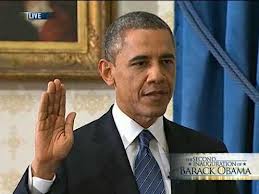
Not the war(s)?
Nah –  Afghanistan will be over in the next 6 months (mark my words!). Obama has let us all know that the ‘discussion’ about the timetable for troop withdrawal is being moved up. What does that translate to? We know the war is unwinnable, and we’re getting the flock out. And
  Iraq? A distant and unfortunate memory.
You won’t see us involved with boots on the ground any time within the remainder of this century, even when the Republicans retake the White House in 2016 – not gonna happen.
So why economics?
There are three reasons why economics is important to me right now:
1) I just  retired, and money is going to be an issue for the next 4 years or so until I go back to work at 66;
2) Economics is driving the world stage right now, as you can tell from my posts on the topic (e.g. the new  Hitler rising); and
3) With Emily and my investing in the  stock market, it renewed my interest in things economic, that had lain dormant for many years post-1987 when I quite investing myself.
So – having said all that – what about Andy Xie?
Andy just wrote a wonderful post (aren’t they all) about the effect of the Fed and China’s monetary policy. The title of it is: “Money Cannot Buy Growth”.
And what, exactly, did Andy say?
Well, here’s the deal. The statement “money can’t buy growth” reflects the reality of how the U.S. and China have dealt with the economic slowdown. Both countries have tried massive amounts of liquidity thrust into the economy in order to stimulate growth. Did it work? Well, that’s a good question: compared to what? How would things have been without that massive injection of liquidity? That’s difficult to say.
But that’s not the point of his article. It is an agreed-to premise by every economist (except maybe “Republican” economists – whatever they are) that all this money chasing fewer and fewer goods will lead to that old bugaboo – inflation.
What’s that?
Good question! We certainly haven’t worried about it for the past 4 years. The Japanese haven’t worried about it in 20 years! So you have to reflect back on the 70’s to recall what came to be called “stagflation” – a stagnant economy infected with the plague known as inflation.
So what’s the big deal?
Inflation – simply defined as mentioned above – is too many dollars chasing too few goods. Why hasn’t it infected us before? Per Andy, two reasons:
1) As more money entered the system, China cranked up the manufacturing capacity, so the ‘too few goods’ never came to pass; and
2) A lot of that money went – contrary to the Fed’s intent – not into buying ‘stuff’ but into paying down egregious debt on the part of Americans.
So does that mean inflation is in our future? Yes, most definitely. Everybody agrees – just a question of when.
Some say 2014 – I say we won’t begin to see any big changes until 2015. Why? The Fed has as its target not inflation, per se, but employment. When unemployment gets below 7.5%, then they will ease up on the QE-infinity and begin to raise interest rates.
OK, again – so? With the population so used to low interest rates, the slightest increase will be met with concern – nay, likely panic. Anything that raises the cost of debt is bad, right?
Double edged sword…but let’s get to the good part of his advice.
So if money won’t buy growth, what will? This is the cool part.
He says lowering the cost of these three things is the answer to growth stimulation in America:
Housing
Health Care
Education
Interesting, and somewhat counter-intuitive, eh? Housing – low interest rates, but costs on the rise. Likely to happen? Nah…Government could make it a whole lot easier for folks to buy a house. Still plenty of inventory left – ?
Health Care? Obamacare! Supposed to reduce the cost of health care – only with cooperation from the states – remains to be seen…
Education
That’s important – get those kids going to college that can’t afford it now or must take on massive debt to get that degree and then not have a job – road to nowhere? That’s a myth that must be overcome.
Interesting notion – even Andy says not likely to happen quickly as too many vested interests to overcome.
We’ll see…
So I’m taking a 3 year hiatus to learn a new skill and then back to work. Why? By the time I’m 66, Emily will be 13 and will have no interest whatsoever in hanging out with Grandma. So why not find another work life? That which I enjoy the most is spending time with her and without that – need to go back to work.
Oh, Andy talks about that too – the beginning of the end for white collar workers in this country. Their jobs will be exported around the globe. So what happens? Folk like me take the pension instead of working for peanuts. So what’s the answer? That’s what Michael Theed and I need to figure out!
Later…