
Hey, Faithful Readers –
Been a while since the last post – been busy with family matters. But I’m back, frankly trying to figure out what is happening in the not-too-distant future of the investment/financial world.
Reading the latest post on Caixin Online from Andy Xie, he who stays a couple of weeks ahead of everybody else with his writing…
the latest is relatively hard to digest, so bear with me while I ramble a bit or just try to parse things out. As always, I try to take global stuff and break it down into bite sized pieces and then translate it to common sense language. Thus far, it’s been pretty straightforward, but now it’s getting into the complex world of 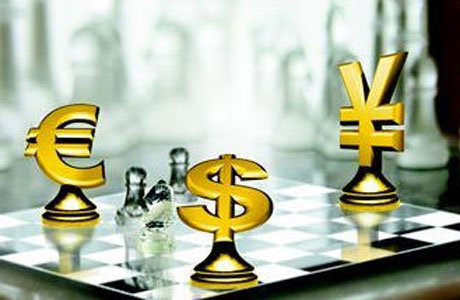 currencies.
Here’s Andy’s latest:
http://english.caixin.com/2013-02-04/100489386.html
The title is “The Consequences of a Strong Dollar”…
Andy reviews the history of bull markets, which have numbered exactly 2 in the last 40 years or so. The first was a reaction to Paul Volcker’s raising interest rates to 18% to finally break the back of chronic inflation. It worked. I remember buying a five piece place setting of  Wedgwood Runnymede Dark blue in 1983 for the amazingly low price (at the time) of $118. Recall this was before Ebay and such, where you had to order direct from Great Britain and the currency changes made for a 30% reduction in the price. I still have that place setting, by the way…
The second bull market for international currency to rush into dollars was in the 90’s with the IT/web revolution going on here, but apparently no where else in the world (who can remember from so long ago?) Of course, that ‘bubble’ had to end, which it did at the beginning of the new millenium…lots of tech companies didn’t survive and got flushed down the drain. Remember  etoys.com? Hey – they got reinvented and exist again! Who knew? I know…get on with it!
Andy goes on in the next section to assert that the dollar has been “in a bear market” 70% of the time since the early 1970’s. What does it mean for the dollar to be in a bear market? It means that, relative to other currencies, the dollar is not increasing in value, but rather decreasing, albeit slowly most of the time. OK – what does that mean for me and my wallet? Not much, unless you’re a farmer and export your wheat to Outer Mongolia. OK…so why are we talking about this? Hey, I’m getting to that…keep your shirt on!
Some more factoids: it was Richard Nixon – your and my favorite president of all time (not) that ‘unpegged’ the dollar from a gold standard. Why’d he do that? Those of us around in the 70’s remember going to the grocery store and seeing the price of meat gain 15 or 20 cents a pound in price, frankly at a time when that was a significant increase. Nixon had an inflation problem  (Emily: what’s inflation? Recite, please: “inflation is too many dollars chasing too few goods.”) Correct! Geez, this is draggin’ on…
Listen, I’ll provide a synopsis of that period of time later. Here’s the gist of what Andy is saying here: Pay attention – here it comes:
A strengthening dollar will draw investment from around the world. As it’s a zero sum game, those investments have to be converted from yen, Euros, rubles or Bahts (Thai money). The outflow of money from those other economies will have varying effects. From the established economies (the Euro)? A stronger dollar will probably help them, as they are in a vicious cycle caused by the disparity in wealth between the north and south. But the emerging economies, and Asia? The emerging economies (BRIC – Brazil, Russia, India and China) will likely be most affected. Thailand already went thru its crisis in the late 90’s, and acquired gold instead of lots of foreign currencies to help itself survive the next round of musical chairs. But the emerging economies will be hit the hardest. Why? They’ve been enjoying big growth and now that growth will slow. So their growth slows? Remember, gentle readers: the world is now a global village, and what happens elsewhere eventually affects us all.
So where will all this end? As usual, it’s too soon to tell. But I can and will say this: anyway you slice it, inflation will become a reality within the next 18 to 24 months. When it does become a reality, things will quickly change for everybody, but in particular for retirees on fixed incomes. So what should one do if one is in that situation? Buy stuff now, before it’s too expensive later. Buy another house – one to keep and one to pay off with the proceeds from the one you sell. Hunker down and  grow a garden, because everything will begin to be veeerrrryyy expensive…Ciao~!