

Sometimes I think the way powers-that-be in the world deal with today’s economic problems is so interesting. It kind of reminds me of the plot lines of those horror movies of the 50’s, post Atomic blast in Japan. Remember Godzilla? The Thing? The plot was nearly always the same: all is well, men & women working & playing together, seemingly oblivious to the dangers that lurked in the sea or on the other side of that door! After the monster appeared, government reps got together to talk about it – mostly by waving their arms and shouting. Then the army was called out to destroy the monster – and there was the rub. How? Nobody knew, so they just blasted at it. Sometimes that worked (almost never); sometimes it made the critter even stronger (oh my!) But in the end, by some fluke – or by listening to some curly-haired scientist – the monster was done away with by, say another monster, or a CO2 Extinguisher (cold) – or more often by some deus ex machina when they got to the end of the reel.
So isn’t that how world leaders of all the developed and developing nations have dealt with the economic downturn?
Everybody did it ‘their way’ and said ‘their way’ was best. But all their solutions accomplished as much as the army blasting Godzilla – it either made the problem go away temporarily (judging by all the sequels, clearly they didn’t kill the monster) or they made it worse.
Or how about … doo doo, doo doo, doo doo…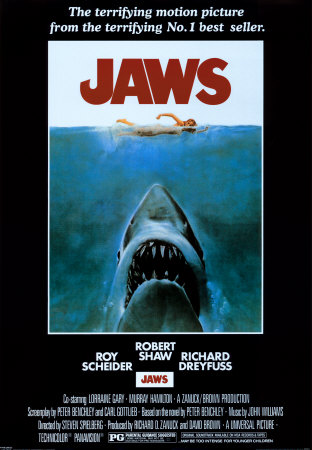 the monster shark in Jaws? The best and most comparable element in that plot line was this one: “the problem has gone away, it’s now safe to go back in the water”. This came from the corrupt Mayor, artfully and smarmily portrayed by Murray Hamilton. But you knew by looking into his eyes he wasn’t telling the truth.
What’s a sheriff to do?
What prompted this post was my thinking that our current ‘situation’ is a confluence of major shifts in world dynamics. What major shifts are those? There are three:
Real estate bubbles
China’s joining the World Trade Organization in 2001, and
Demographics
OK, you say, I’ll bite – please ‘splain.
Let’s start with the last one – demographics. Around the world, not just in the US, birth rates skyrocketed at the end of the Second World War. The ‘baby boom generation’ lasted from 1945 to 1953.  Birth control began to be available on a truly large scale starting in the 1970’s, along with legalized abortion via Roe v Wade in 1973. China’s ‘one child policy’ began in 1979. The net effect of these monumental changes was a significant reduction in the birth rate across the developed and parts of the developing world. The overall ‘crude’ birth rate in the world has been cut in half since 1950.
So what is the result? Fewer workers in the workplace, since the ‘boomers’ are 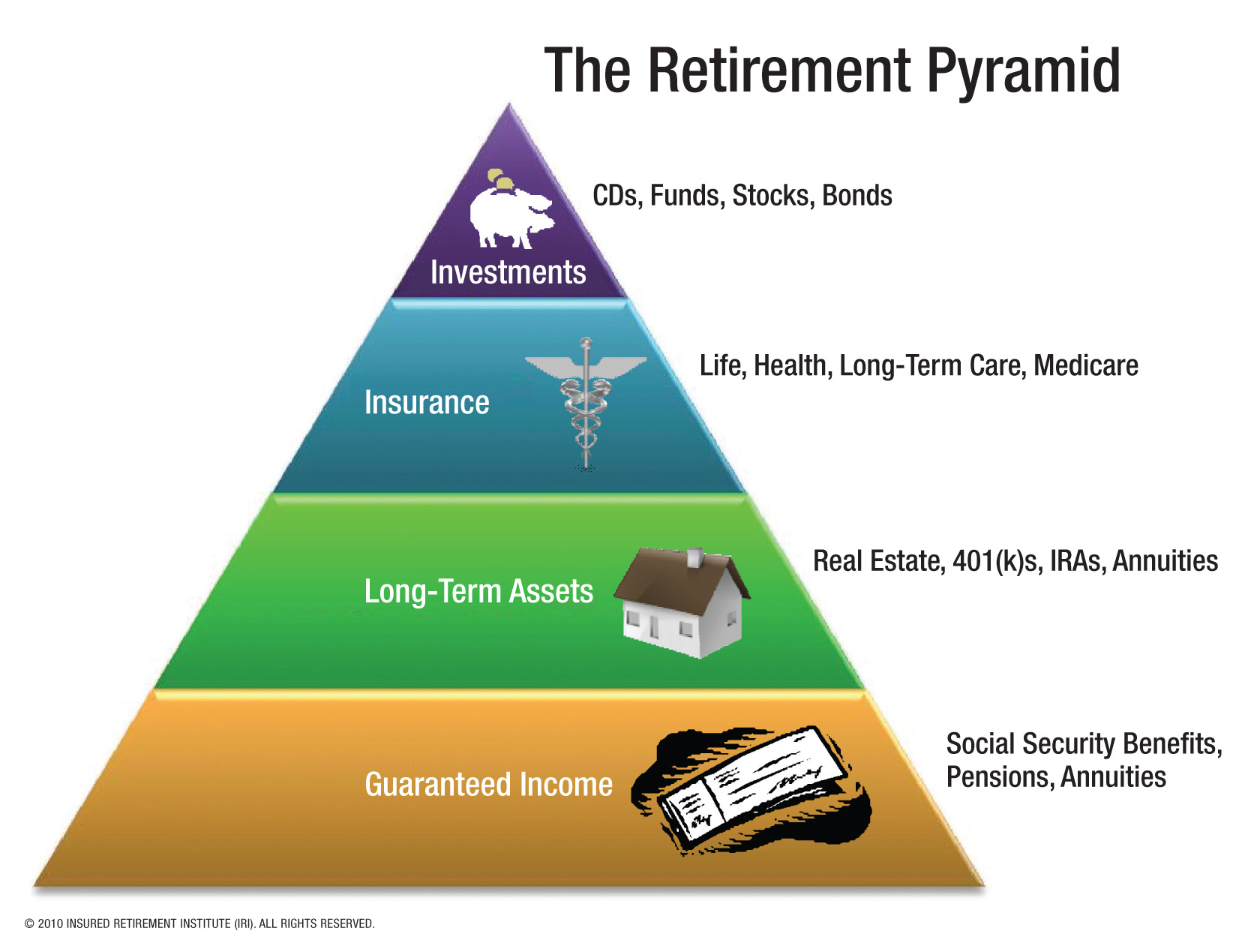 retiring at an increasing rate. The impact? Varies, depending on the location. In xenophobic countries like Japan, with no workers adding to government revenues, it’s a killer. In China, it makes the export growth model no longer viable, because they are beginning to run out of blue collar workers. The solution is reforms to encourage innovation, and an end to widespread, local government corruption. In the U.S.? Hello, immigrants! We love you…! Not so fast…John McCain’s town hall meeting the other day put the kibosh on that notion!
China’s joining the World Trade Organization reduced tariffs on its goods. Deng Xiaoping’s hand chosen successor Jiang Zemin continued his reforms, decreasing the number of state-owned enterprises by nearly half. These changes propelled the Chinese economy, and in 2010, China became the second largest world economy. But all was not well: a lot of change occurred in a relatively short period of time, with a lot of state-owned enterprise workers laid off. Hold that thought for a bit.
Finally real estate bubbles. Here we are again with the refrain: What’s inflation? Too many dollars chasing too few goods. Thank you, Emily. The growth in the Chinese economy with no consumer goods to spend it on in-country led to the Chinese flooding the US with money, effectively buying up as much debt as we were willing to issue. All those dollars had to go somewhere, and the somewhere was in real estate. From 2001 to 2005, a huge real estate bubble occurred, not only in the U.S. but in China as well. In fact, according to the latest post from Andy Xie, China has been dealing with this issue for the past two decades. The net effect is an effective lowering of the standard of living for citizens in the US and China. The difference, however, is in mortgages. In China, it’s relatively rare to purchase real estate with a mortgage: people must pay cash. So there wasn’t the big crash in their government-owned banks that was experienced in the U.S. when households could no longer sustain the debt load. This became particularly so in late 2007 when unemployment began to significantly increase. The other major difference is that nearly all the property in China is owned by the government. The way local governments have survived, first reforms and then the downturn was to sell real estate, or develop it themselves. Since the export growth model is no longer effective, they’re living off the bubble. You know that isn’t sustainable.
So what about any real good solutions?
Like the monster movies, everybody has the right answer, but have any of them really been effective? I’d say not really. Why?
Primarily because the world has not come together in a coordinated, concerted effort to resolve the economic issues that have occurred as a result of those three afore-mentioned realities.
So  Great Britain’s answer is like the Tea Party’s, but worse: cut spending and raise taxes. They cut government spending to the bone. However, with the economic downturn and high unemployment, tax revenue decreased. In order to keep things afloat, their debt has increased significantly since 2007. Result? Incipient inflation, so much so that the world’s economic advisors are steering their clients away from British “Gilts” (like our treasury bonds). They will inflate their debt away, to the detriment of their citizenry. So thank goodness we didn’t listen to the Brits!
Then there’s China’s solution. We’ve talked about the need for a continuation of reform in previous posts. Reform stopped in 2005 with the change in government because of the fear of social instability with the advent of widespread use of the internet. China is living off Fixed Asset Investment. That is akin to all of us refinancing our houses every year from 2001 to 2005 and living off the proceeds. You know you did, as did we. You know how that ends. It’s that musical chairs thing again. Social instability? They ain’t seen nuthin’ yet.
The European Union and the U.S. just keep doing the Murray Hamilton number: it’s all good now, there are no real problems, it’ll all work out in time.  Kick that can down the road, will ya? Not the way, either.
So if I were in charge, what would I do? Well, it’s been done before, at  Bretton Woods after World War II. George Marshall got the world leaders together to agree on a way to manage the world’s currency in the aftermath of a devastated Europe and Japan. The solution was simple: the dollar would become the world currency, and would be convertible to gold upon demand. That worked well until 1971, when war expenses caused Nixon to renege on the deal. Since then we’ve had fiat currency. Fiat currency – nothing backing up those little pieces of paper – will inevitably lead to ruin, because we just keep printing more of the little darlings. The end result? Yes, say it again:
 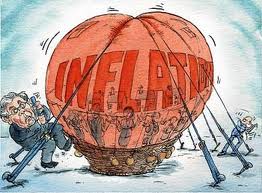 INFLATION!!!
The only solution is to return to the gold standard, or some other agreed-upon mechanism. This will cause pain in the short term for a long term benefit. But will we do that? Not likely. Governments have been buying massive quantities of gold, to avoid getting caught short with devalued currencies in their accounts. This, in turn, has greatly upped the price of gold.
So it’s everyone for themselves. Godzilla the monster is coming – not a question of whether, just when and where and to what extent. My quick and dirty solution? Buy two houses as soon as possible: one to keep until you die, and one to sell at inflated prices to live on ’til the end.
Or, run for your lives!