
Abe-nomics: Is That Like Abe-Normal?

Marty Feldman

I’m BBBAACCKKK!

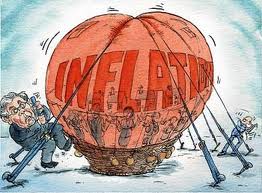
Let’s talk about EDIT660-AbenomicsRx-870x396 Abenomics. You surely know from previous posts that Shinzo Abe (spelled with either an “e” or an “i” in his first name – take your pick) has created a very different economic rubric (love that word! also ref: protocol) for Japan. The government is spending over 7.5 trillion yen a month to flood the country with yen and effectively devalue their pre-existing debt. Ref: Helicopter Ben’s QE-infinity.
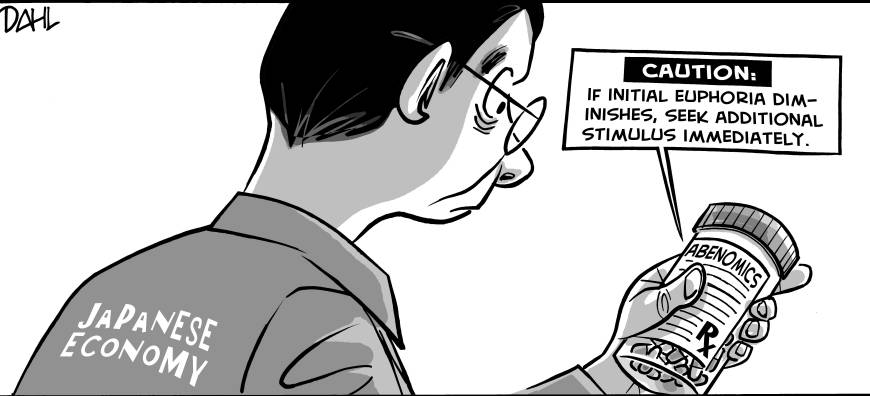
Why did he do this? Deflation has been a nagging problem in Japan for two decades. While deflation is good for old folks, it hasn’t been good for the next generation – the last generation that stands between the old folks and destitution. Abe’s obviously gotten a new financial guru to say that this is not sustainable, and that Shinzo must buck the system and change the economic climate in Japan. With much fanfare, the Abe government announced these plans, and then strong-armed the Bank of Japan into cooperating with this strategy.

What’s the result of this? The Nikkei Dow has risen from around 8500 in late October to over 13,000 today. At the rate it’s increasing, it will surpass the all-time-high Dow Jones Industrial average within the next 6 months – maybe earlier. Is that a good thing? Depends on who you ask…

Old timers like George Soros hate the concept and he predicts a dire end. I begin to think that if you make George Soros unhappy, you’re probably on the right track, as he benefits from government stupidity. Others – like my favorite columnist Ambrose E-P, says that Abenomics is the only alternative for Japan. So only time will tell who is right and who is not!

Where did Shinzo get this idea – did he invent it? Nay, nay – his financial guru obviously followed the work of Korekiyo Takahashi Korekiyo Takahashi, the Finance Minister of Japan from 1927 until his death at the hands of young military officers in 1936. Those officers assassinated Takahashi for cutting the military budget. Cardinal sin when you have plans for global domination, eh?
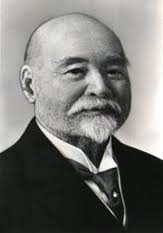
Takahashi dealt with the Great Depression by flooding Japan with yen. The resulting boom in business increased tax revenues and saved Japan from the misery inflicted on the rest of the world, which insisted on sticking to the gold standard. That is effectively what Abe believes will occur as a result of his administration’s actions. Apparently stock market investors agree with him – otherwise why would the Nikkei have nearly doubled in the past 6 months? According to AEP, it takes two to four years for the full effects of this type of easing to be fully felt. It took three years for Takahashi to succeed in his gamble.

So for the thousandth time you ask: what the devil does this have to do with anything? Why, oh why are you so obsessed with the topic of Asian economics?

My somewhat vague responses in the past have been about global village and what affects the rest of the world affects us. You never really liked that answer, didja? OK, so why else, you query? Well, to be perfectly candid, it’s a question of trust.

Trust? Yup, or better phrased: who do you trust?

It’s easier to say who I don’t trust in matters relative to American economics: just about everybody. Nobody is immune from spin these days. You cannot read anything without wondering which side of the political divide the author represents. Alternatively, you wonder, who are they shilling for? So with all the information available on the internet, where can you go for the straight scoop? Nowhere. So what do you do? I rely on a couple of authors – you know who they are – to tell me what I want to know, and then – by extrapolation – I can assess the situation for the U S of A. A bit tortured, somewhat oblique, but hey – that’s me…

OK, you respond – so extrapolate away! What’s new & different? You say buy a couple houses – check. You say grow a garden because inflation will affect food prices, check. Is that all there is?

Aha – back to soothsayer status…get that pic out… 6a00d834518c6c69e200e54f8772e38834-640wi okay – new Oraclular predictions…

Here goes. First some facts: The Dow is at an all time high. Unemployment is dropping, albeit slowly. Core inflation is running at about 2%, so nothing to be concerned about there. Washington is beginning to work together to solve the nation’s problems of gun violence and immigration. All good so far. But what about things that aren’t so good? While shipping stocks are up, they’re still off by ‘normal’ standards by 70 or 80%. The Baltic Exchange Dry Index is rising, but still stands at less than a thousand. Commodity prices are dropping – including gold. So what does all this add up to?

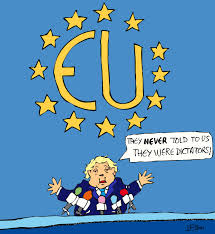
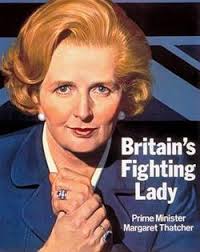
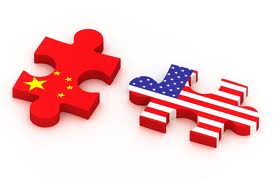
Here it comes: nothing. The next couple of years – thru spring of 2015 – we’re gonna just bump along. We’ll have a few ups and a few downs, but nothing substantial. The economy will slowly begin to pull itself up and become sustainable. Sorry to be so dull, but actually – that’s really good news! Because the European Community will not be calm at all. TheEU pic EU will suffer mightily in the same time frame, on their way to a big blowup with hard feelings and recriminations all around. In my humble opinion, the next serious world-wide conflagration will arise from the misery inflicted by this experiment-gone-bad called the European Union. Rest in peace, Margaret ThatcherMaggie Thatcher. You were right all along. But as with most people who are right (Abe Lincoln, Mahatma Ghandi, Korekiyo Takahashi) you are punished for being a strong leader in your lifetime. So expect to see lots of unhappiness coming from the EU due to lack of that kind of leadership. But when a leader does emerge – watch out…Think Adolph Hitler, Benito Mussolini and Tojo…war is not going to be small or pretty, but it is inevitable. And when it occurs, who will be the big winners? US & ChinaThe U.S. and China…you heard it here first.
The Godzilla Solution


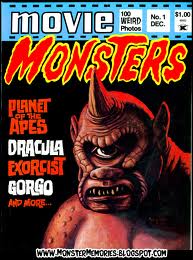
Sometimes I think the way powers-that-be in the world deal with today’s economic problems is so interesting. It kind of reminds me of the plot lines of those horror movies of the 50’s, post Atomic blast in Japan. Remember Godzilla? The Thing? The plot was nearly always the same: all is well, men & women working & playing together, seemingly oblivious to the dangers that lurked in the sea or on the other side of that door! After the monster appeared, government reps got together to talk about it – mostly by waving their arms and shouting. Then the army was called out to destroy the monster – and there was the rub. How? Nobody knew, so they just blasted at it. Sometimes that worked (almost never); sometimes it made the critter even stronger (oh my!) But in the end, by some fluke – or by listening to some curly-haired scientist – the monster was done away with by, say another monster, or a CO2 Extinguisher (cold) – or more often by some deus ex machina when they got to the end of the reel.

So isn’t that how world leaders of all the developed and developing nations have dealt with the economic downturn?

Everybody did it ‘their way’ and said ‘their way’ was best. But all their solutions accomplished as much as the army blasting Godzilla – it either made the problem go away temporarily (judging by all the sequels, clearly they didn’t kill the monster) or they made it worse.

Or how about … doo doo, doo doo, doo doo… the monster shark in Jaws? The best and most comparable element in that plot line was this one: “the problem has gone away, it’s now safe to go back in the water”. This came from the corrupt Mayor, artfully and smarmily portrayed by Murray Hamilton. But you knew by looking into his eyes he wasn’t telling the truth.

What’s a sheriff to do?

What prompted this post was my thinking that our current ‘situation’ is a confluence of major shifts in world dynamics. What major shifts are those? There are three:

Real estate bubbles
China’s joining the World Trade Organization in 2001, and
Demographics

OK, you say, I’ll bite – please ‘splain.

Let’s start with the last one – demographics. Around the world, not just in the US, birth rates skyrocketed at the end of the Second World War. The ‘baby boom generation’ lasted from 1945 to 1953. Birth control began to be available on a truly large scale starting in the 1970’s, along with legalized abortion via Roe v Wade in 1973. China’s ‘one child policy’ began in 1979. The net effect of these monumental changes was a significant reduction in the birth rate across the developed and parts of the developing world. The overall ‘crude’ birth rate in the world has been cut in half since 1950.

So what is the result? Fewer workers in the workplace, since the ‘boomers’ are retiring at an increasing rate. The impact? Varies, depending on the location. In xenophobic countries like Japan, with no workers adding to government revenues, it’s a killer. In China, it makes the export growth model no longer viable, because they are beginning to run out of blue collar workers. The solution is reforms to encourage innovation, and an end to widespread, local government corruption. In the U.S.? Hello, immigrants! We love you…! Not so fast…John McCain’s town hall meeting the other day put the kibosh on that notion!

China’s joining the World Trade Organization reduced tariffs on its goods. Deng Xiaoping’s hand chosen successor Jiang Zemin continued his reforms, decreasing the number of state-owned enterprises by nearly half. These changes propelled the Chinese economy, and in 2010, China became the second largest world economy. But all was not well: a lot of change occurred in a relatively short period of time, with a lot of state-owned enterprise workers laid off. Hold that thought for a bit.

Finally real estate bubbles. Here we are again with the refrain: What’s inflation? Too many dollars chasing too few goods. Thank you, Emily. The growth in the Chinese economy with no consumer goods to spend it on in-country led to the Chinese flooding the US with money, effectively buying up as much debt as we were willing to issue. All those dollars had to go somewhere, and the somewhere was in real estate. From 2001 to 2005, a huge real estate bubble occurred, not only in the U.S. but in China as well. In fact, according to the latest post from Andy Xie, China has been dealing with this issue for the past two decades. The net effect is an effective lowering of the standard of living for citizens in the US and China. The difference, however, is in mortgages. In China, it’s relatively rare to purchase real estate with a mortgage: people must pay cash. So there wasn’t the big crash in their government-owned banks that was experienced in the U.S. when households could no longer sustain the debt load. This became particularly so in late 2007 when unemployment began to significantly increase. The other major difference is that nearly all the property in China is owned by the government. The way local governments have survived, first reforms and then the downturn was to sell real estate, or develop it themselves. Since the export growth model is no longer effective, they’re living off the bubble. You know that isn’t sustainable.
So what about any real good solutions?

Like the monster movies, everybody has the right answer, but have any of them really been effective? I’d say not really. Why?

Primarily because the world has not come together in a coordinated, concerted effort to resolve the economic issues that have occurred as a result of those three afore-mentioned realities.

So Great Britain’s answer is like the Tea Party’s, but worse: cut spending and raise taxes. They cut government spending to the bone. However, with the economic downturn and high unemployment, tax revenue decreased. In order to keep things afloat, their debt has increased significantly since 2007. Result? Incipient inflation, so much so that the world’s economic advisors are steering their clients away from British “Gilts” (like our treasury bonds). They will inflate their debt away, to the detriment of their citizenry. So thank goodness we didn’t listen to the Brits!

Then there’s China’s solution. We’ve talked about the need for a continuation of reform in previous posts. Reform stopped in 2005 with the change in government because of the fear of social instability with the advent of widespread use of the internet. China is living off Fixed Asset Investment. That is akin to all of us refinancing our houses every year from 2001 to 2005 and living off the proceeds. You know you did, as did we. You know how that ends. It’s that musical chairs thing again. Social instability? They ain’t seen nuthin’ yet.

The European Union and the U.S. just keep doing the Murray Hamilton number: it’s all good now, there are no real problems, it’ll all work out in time. Kick that can down the road, will ya? Not the way, either.

So if I were in charge, what would I do? Well, it’s been done before, at Bretton Woods after World War II. George Marshall got the world leaders together to agree on a way to manage the world’s currency in the aftermath of a devastated Europe and Japan. The solution was simple: the dollar would become the world currency, and would be convertible to gold upon demand. That worked well until 1971, when war expenses caused Nixon to renege on the deal. Since then we’ve had fiat currency. Fiat currency – nothing backing up those little pieces of paper – will inevitably lead to ruin, because we just keep printing more of the little darlings. The end result? Yes, say it again: INFLATION!!!

The only solution is to return to the gold standard, or some other agreed-upon mechanism. This will cause pain in the short term for a long term benefit. But will we do that? Not likely. Governments have been buying massive quantities of gold, to avoid getting caught short with devalued currencies in their accounts. This, in turn, has greatly upped the price of gold.

So it’s everyone for themselves. Godzilla the monster is coming – not a question of whether, just when and where and to what extent. My quick and dirty solution? Buy two houses as soon as possible: one to keep until you die, and one to sell at inflated prices to live on ’til the end.

Or, run for your lives!

movie monster


Been a While

Hey, Faithful Readers –

Been a while since the last post – been busy with family matters. But I’m back, frankly trying to figure out what is happening in the not-too-distant future of the investment/financial world.

Reading the latest post on Caixin Online from Andy Xie, he who stays a couple of weeks ahead of everybody else with his writing…

the latest is relatively hard to digest, so bear with me while I ramble a bit or just try to parse things out. As always, I try to take global stuff and break it down into bite sized pieces and then translate it to common sense language. Thus far, it’s been pretty straightforward, but now it’s getting into the complex world of currencies.

Here’s Andy’s latest:

http://english.caixin.com/2013-02-04/100489386.html

The title is “The Consequences of a Strong Dollar”…

Andy reviews the history of bull markets, which have numbered exactly 2 in the last 40 years or so. The first was a reaction to Paul Volcker’s raising interest rates to 18% to finally break the back of chronic inflation. It worked. I remember buying a five piece place setting of Wedgwood Runnymede Dark blue in 1983 for the amazingly low price (at the time) of $118. Recall this was before Ebay and such, where you had to order direct from Great Britain and the currency changes made for a 30% reduction in the price. I still have that place setting, by the way…

The second bull market for international currency to rush into dollars was in the 90’s with the IT/web revolution going on here, but apparently no where else in the world (who can remember from so long ago?) Of course, that ‘bubble’ had to end, which it did at the beginning of the new millenium…lots of tech companies didn’t survive and got flushed down the drain. Remember etoys.com? Hey – they got reinvented and exist again! Who knew? I know…get on with it!

Andy goes on in the next section to assert that the dollar has been “in a bear market” 70% of the time since the early 1970’s. What does it mean for the dollar to be in a bear market? It means that, relative to other currencies, the dollar is not increasing in value, but rather decreasing, albeit slowly most of the time. OK – what does that mean for me and my wallet? Not much, unless you’re a farmer and export your wheat to Outer Mongolia. OK…so why are we talking about this? Hey, I’m getting to that…keep your shirt on!

Some more factoids: it was Richard Nixon – your and my favorite president of all time (not) that ‘unpegged’ the dollar from a gold standard. Why’d he do that? Those of us around in the 70’s remember going to the grocery store and seeing the price of meat gain 15 or 20 cents a pound in price, frankly at a time when that was a significant increase. Nixon had an inflation problem (Emily: what’s inflation? Recite, please: “inflation is too many dollars chasing too few goods.”) Correct! Geez, this is draggin’ on…

Listen, I’ll provide a synopsis of that period of time later. Here’s the gist of what Andy is saying here: Pay attention – here it comes:

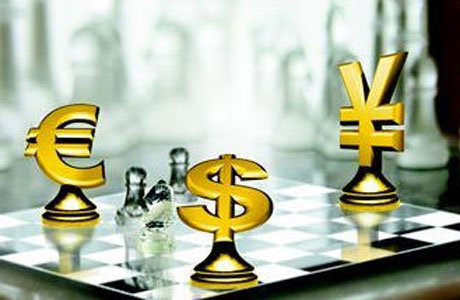
A strengthening dollar will draw investment from around the world. As it’s a zero sum game, those investments have to be converted from yen, Euros, rubles or Bahts (Thai money). The outflow of money from those other economies will have varying effects. From the established economies (the Euro)? A stronger dollar will probably help them, as they are in a vicious cycle caused by the disparity in wealth between the north and south. But the emerging economies, and Asia? The emerging economies (BRIC – Brazil, Russia, India and China) will likely be most affected. Thailand already went thru its crisis in the late 90’s, and acquired gold instead of lots of foreign currencies to help itself survive the next round of musical chairs. But the emerging economies will be hit the hardest. Why? They’ve been enjoying big growth and now that growth will slow. So their growth slows? Remember, gentle readers: the world is now a global village, and what happens elsewhere eventually affects us all.

So where will all this end? As usual, it’s too soon to tell. But I can and will say this: anyway you slice it, inflation will become a reality within the next 18 to 24 months. When it does become a reality, things will quickly change for everybody, but in particular for retirees on fixed incomes. So what should one do if one is in that situation? Buy stuff now, before it’s too expensive later. Buy another house – one to keep and one to pay off with the proceeds from the one you sell. Hunker down and grow a garden, because everything will begin to be veeerrrryyy expensive…Ciao~!

Andie Xie’s at It Again

My two favorite columnists are Ambrose Evans-Pritchard and Andy Xie. OK – say it – NERD!

Yes, indeed, I readily confess: I am an economics nerd.

Why?

Because it’s what is the most interesting and impactful area of discussion around today.

Not politics?

Nah – we won.

Not the war(s)?

Nah – Afghanistan will be over in the next 6 months (mark my words!). Obama has let us all know that the ‘discussion’ about the timetable for troop withdrawal is being moved up. What does that translate to? We know the war is unwinnable, and we’re getting the flock out. And Iraq? A distant and unfortunate memory.

You won’t see us involved with boots on the ground any time within the remainder of this century, even when the Republicans retake the White House in 2016 – not gonna happen.

So why economics?

There are three reasons why economics is important to me right now:

1) I just retired, and money is going to be an issue for the next 4 years or so until I go back to work at 66;

2) Economics is driving the world stage right now, as you can tell from my posts on the topic (e.g. the new Hitler rising); and

3) With Emily and my investing in the stock market, it renewed my interest in things economic, that had lain dormant for many years post-1987 when I quite investing myself.

So – having said all that – what about Andy Xie?

Andy just wrote a wonderful post (aren’t they all) about the effect of the Fed and China’s monetary policy. The title of it is: “Money Cannot Buy Growth”.

And what, exactly, did Andy say?

Well, here’s the deal. The statement “money can’t buy growth” reflects the reality of how the U.S. and China have dealt with the economic slowdown. Both countries have tried massive amounts of liquidity thrust into the economy in order to stimulate growth. Did it work? Well, that’s a good question: compared to what? How would things have been without that massive injection of liquidity? That’s difficult to say.

But that’s not the point of his article. It is an agreed-to premise by every economist (except maybe “Republican” economists – whatever they are) that all this money chasing fewer and fewer goods will lead to that old bugaboo – inflation.

What’s that?

Good question! We certainly haven’t worried about it for the past 4 years. The Japanese haven’t worried about it in 20 years! So you have to reflect back on the 70’s to recall what came to be called “stagflation” – a stagnant economy infected with the plague known as inflation.

So what’s the big deal?

Inflation – simply defined as mentioned above – is too many dollars chasing too few goods. Why hasn’t it infected us before? Per Andy, two reasons:

1) As more money entered the system, China cranked up the manufacturing capacity, so the ‘too few goods’ never came to pass; and

2) A lot of that money went – contrary to the Fed’s intent – not into buying ‘stuff’ but into paying down egregious debt on the part of Americans.

So does that mean inflation is in our future? Yes, most definitely. Everybody agrees – just a question of when.

Some say 2014 – I say we won’t begin to see any big changes until 2015. Why? The Fed has as its target not inflation, per se, but employment. When unemployment gets below 7.5%, then they will ease up on the QE-infinity and begin to raise interest rates.

OK, again – so? With the population so used to low interest rates, the slightest increase will be met with concern – nay, likely panic. Anything that raises the cost of debt is bad, right?

Double edged sword…but let’s get to the good part of his advice.

So if money won’t buy growth, what will? This is the cool part.

He says lowering the cost of these three things is the answer to growth stimulation in America:

Housing
Health Care
Education

Interesting, and somewhat counter-intuitive, eh? Housing – low interest rates, but costs on the rise. Likely to happen? Nah…Government could make it a whole lot easier for folks to buy a house. Still plenty of inventory left – ?

Health Care? Obamacare! Supposed to reduce the cost of health care – only with cooperation from the states – remains to be seen…

Education

That’s important – get those kids going to college that can’t afford it now or must take on massive debt to get that degree and then not have a job – road to nowhere? That’s a myth that must be overcome.

Interesting notion – even Andy says not likely to happen quickly as too many vested interests to overcome.

We’ll see…

So I’m taking a 3 year hiatus to learn a new skill and then back to work. Why? By the time I’m 66, Emily will be 13 and will have no interest whatsoever in hanging out with Grandma. So why not find another work life? That which I enjoy the most is spending time with her and without that – need to go back to work.

Oh, Andy talks about that too – the beginning of the end for white collar workers in this country. Their jobs will be exported around the globe. So what happens? Folk like me take the pension instead of working for peanuts. So what’s the answer? That’s what Michael Theed and I need to figure out!

Later…

More Abbey

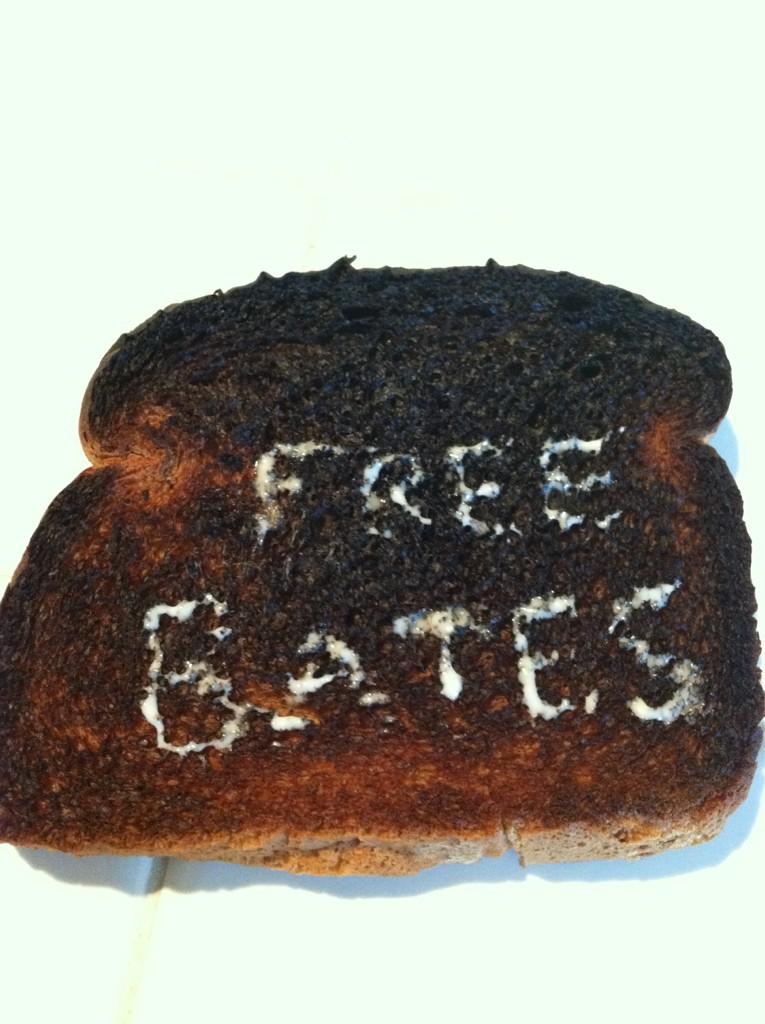
Third episode last night – pretty slow, but as a result of some burned toast, I have discovered

TA DA! TUMBLR!

What a nifty invention – there was a whole bunch of posts relative to Mrs. Hughes’ burning some toast in her room…but this was the best thing on there – made me laugh out loud!

Gotta watch the show to get it…if you watch, enjoy the humor~!

More Questions For the Suite

Suite Francaise was written over 70 years ago, yet just saw the light of day 9 years ago. The manuscript sat in a suitcase that was unopened until shortly before it was sent for review to a publisher. The ‘discoverer’, the daughter of the author, Denise Epstein, painstakingly typed out the manuscript from the tiny handwriting she’d found.

Many of the names that Irene used were the same as people in her life. For example: Cecile and the surname Michaud were the first and last name of the Nanny whose family saved the Epstein daughters from extermination after the parents were sent away (Epstein is Irene’s married name). In the book, Cecile and the Michauds are different characters that never meet.

Irene took life around her as she saw it and wove it into a story that she was fairly confident would not be read until much later. In a letter, she indicates it won’t be published until the 50’s, or maybe for a thousand years. The editor posits that she chose that time frame as a reflection of Nazi Germany’s assertion that the Third Reich would last for a thousand years.

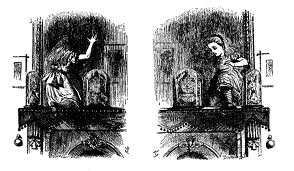
What must it be like to create novel characters that are living the life you’re living, when you know that your life will likely soon be cut short? Or did she know? I argued back and forth with myself about this. There were hints, as through her poetry, where it’s clear she was aware of the danger she and her family faced. At other times – particularly when she was planning later parts of the novel – it seems she thought she’d last until the end of the war. It seems these are the details that make the novel as meaningful as it was, at least to me. It’s a case of Alice and the Looking Glass – which side are you on?

I’m also intrigued by the plays on words in the story. Let’s take “Suite” for example. Irene intended the novel to have five parts:

Storm (which became Storm in June)
Dolce
Captivity
Battles?
Peace?

The question marks after the last two chapters were put there by the author. According to the Preface from the French edition, she was modeling the novel on Beethoven’s Fifth Symphony. In her notes, she talks about the book having ‘four movements’ (like Beethoven’s Fifth) as well as the rhythm in film that makes it work, like rhythm in music. She was looking to incorporate that same rhythm in this novel, hence the use of the word “Suite”. But there’s another, interesting element to the use of the homonym ‘sweet’, which I referenced in the last post. Sweet France? Was France sweet to Irene and her family? Obviously not, since it was the French authorities that had them sent away.

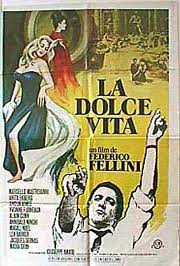
Then there’s the second section: Dolce. Dolce is an Italian word, as in the Fellini 1960 film title “La Dolce Vita”. The sweet life. Dolce means sweet.

I clearly recognize all this is reading way too much into the words, but who knows what the author intended? She was obviously brilliant, and had achieved a significant level of fame prior to her demise. She created characters based on people she knew and observed around her. The novel itself was likely a cathartic mechanism: her way of coping with how her ‘sweet’ life was unraveling around her.

Sweet France?

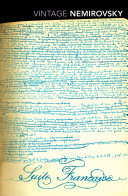
I just finished re-reading “Suite Francaise” by Irene Nemerovsky. The book was written by Irene in 1941 and early 1942, while she was living in France, under German occupation.

If now was then and technology was available, Irene would have been a blogger or embedded journalist. She captured daily life around her, but presented it as fiction. Why? She was an ex-pat Russian Jew, living in a country that was rather confused about its allegiances. France, like most of the ‘civilized’ world in 1942, suffered from anti-Semitism. The difference, however, between other countries and France was the German occupation of the country.

When orders were given to round up Jews and hold them pending deportation, there was little understanding of what was happening to those deportees. The book’s Appendix includes letters from Irene’s husband to her publisher. The letters begin with a hesitant tone (gee, I hate to bother you, but…) expressing concern about her incarceration. Since Irene had asthma, her husband was concerned about her health. His later letters grew increasingly anxious. He was right to be concerned: within 3 months of her move to Auschwitz, Nemerovsky was dead from typhus. Shortly after revealing his Jewish heritage to authorities (as part of his plea to have his wife’s case ‘reviewed’ because of her fame as a writer), her husband was also deported and was immediately sent to the gas chamber at the same concentration camp where Irene perished. Their two young daughters became war orphans in 1942, ending up being raised by their Nanny and her family in a country village. Her elder daughter kept the suitcase containing the manuscript, as the last vestige of her mother’s belongings. It wasn’t until the middle of the first decade of the 21st century that she forced herself to look at the contents of the suitcase. Where she’d expected a diary, she found the material that became Suite Francaise.

So given this as background:

First question posed: does the background of the author make a difference in terms of the likelihood of the book’s seeing publication?

WHAT IS TRUTH?

OK, y’all, your break is over. Back to the heavy stuff.

The title of this post is simple, yet profound. Been talked about since Christ came from New Jersey. Speaking of Christ, let’s start with his good friend and non-savior, Pontius Pilate, who said:

“Quid Est Veritas?” What is truth?

This was said in reply to Jesus who’d just informed Pilate that “Everyone on the side of truth Listens to Me”.

Hmm..then they crucified him…having people on your side for telling the truth can be risky, eh?

Fast forward through history – and again ask the question, What is Truth?

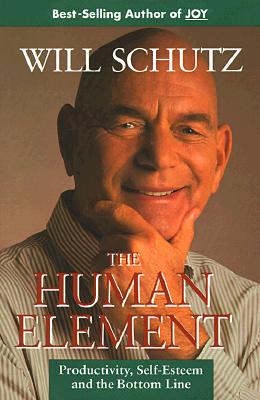
In some training I had when I worked for Proctor & Gamble, a fellow named Will Schutz coined a phrase “levels of truth”, in the context of a training package he called “The Human Element”. This implies that there is no firm and fast and indisputable ‘truth’. There are ‘levels of truth’. But what does that mean?

It means that the face we portray to others, versus the voice that speaks to our inner self are often saying different things.

So what is this all about? Lance Armstrong and Oprah Winfrey.

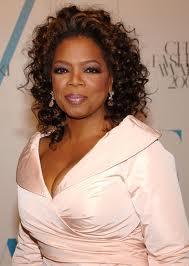
Lance will be going on Oprah’s show (not sure which one – since she retired from daytime tv and started her own network, it’s lost in the noise). But this will be a ratings peak for her – why? Two levels of truth:

Will he confess all and ask for forgiveness? Or,

Will he put on the ‘outside face’ and do a yabbit? You know, yeah, I did use PEDs (performing enhancing drugs), but … fill in the blank..

Second level of truth:

will Oprah be a mother figure, giving absolution and saying “go back to sports, assume your role as a hero, but sin no more? Or,

You are a liar, a cheat, a thief of the truth, you deserve everything you got and I dismiss you from my sight?

Or something in between…that’s what we all want to see…sort of like the Jews surrounding Pilate as he had to make a live/die decision for Jesus.

The Atlantic magazine has a great piece in this week’s on-line magazine – here’s a link, and this one you should DEFINITELY read – it’s well written.

http://www.theatlantic.com/entertainment/archive/2013/01/who-cares-if-lance-armstrong-confesses/267102/3/

These three sports writers consider all dimensions of this ‘truth’ thing relative to Lance, and come to these three conclusions

First from Patrick, who thinks Lance will likely do the ‘yabbit’. Further, he thinks it ‘might work’, satisfying the public who want Lance to go back to being the “Cancer Jesus”. Wow – now that sure fits with my thesis, yes? But then Patrick says if his wishes were fulfilled, Lance should come out swinging and blame the establishment’s morbid fascination with this little, insignificant thing called taking performance enhancing drugs…yeah .. then

Jake Simpson thinks Emily is right when she says “That’s so yesterday”…in fact he calls it a “Chalk outline of a story”. Hmm. Don’t buy that either…Finally

Hampton Stevens artfully says what I believe: “…greatness can always have a dark side, and we all have flaws. Yet somehow dozens of hall-of-fame caliber athletes in every sport manage to win without being terrible human beings. More importantly, they manage to win within the rules.”

Then he goes on to hope that Oprah “…jams that air tank firmly into the shark’s mouth and shoots true.”

What say you to this? Lookin’ for an answer, here!

Downton Abbey

Well, y’all, I’m going to give you a break from all this political & economic claptrap, and talk about something cultural – which means, of course, Public Television!

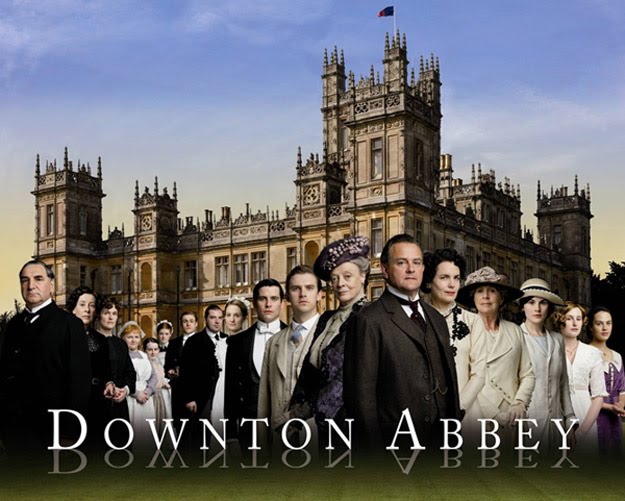
Downton Abbey, Season 3, starts tonight. From the previews, it appears we’ll be treated to more of the shenanigans of the down and upstairs folk, now in post-WW I time frame.

I really enjoyed Season 1. It bore an uncanny resemblance to the plot of the first couple seasons of Upstairs Downstairs, but hey – what’s wrong with repeating success? The monkeyshines of the rich and not so rich kept me enthralled for about 12 hours of programming.

Season 2 seemed to drag on for centuries, even with a segment about catching & dying of the Spanish Flu which is a hot topic with me (see Writing section).

So now we’re up to Season 3, which apparently features Shirley MacLaine as the matron of the manor’s mother – cool, eh?

So enjoy the break from all this stuff, and check out Downton Abbey. You may or may not like it!

Oh, and by the way: if you make it all the way to the end of the first installment – Jack White will be on Austin City Limits right afterward. If you are a fan (as I am) you should enjoy it.

Let me know if you check it out!

EUROPA, EUROPA

As promised, I’m back to guide you through the fascinating nuances of world economics, AEP style (that’s Ambrose Evans-Pritchard, my muse for all things monied…)

The title of the second article was … wait for it …

Stocks to soar as world money catches fire, Calvinst Europe left behind

(Notice he left out the second “i” in Calvinist – budget cuts eliminated editors, eh?)

So the thesis of this article is as follows:

We have a new acronym to add to our economic lexicon: NGDP. That stands for nominal GDP targeting, or as it was known during the Great Depression: “beggar thy neighbor”. I wrote about this a long time ago in the “Economics and Investing” section. Check that out for a brush up on how Hitler got Germany out of the throes of the Depression, and became a mad, sad monster afterward because, like Billy Mumy in that Twilight Zone episode, “It’s a Good Life”, everybody was afraid to tell him “NO”…

So what’s that to do with AEP’s article? Surprisingly, a lot.

The US, China, Japan, Switzerland, and the Scandinavian countries are all adopting different varieties of loose money policies in an attempt to either devalue or stabilize their currencies. In the process, it’s like a game of musical chairs, and the poor cousins of the European Union are going to be the chairless ones. Their adoption of the austerity policies foolishly and ruthlessly required by the rich cousin (Germany) will have the potential to spark a rebellion. Although AEP is not one to predict the where or when of such a thing, looking at the statistics of unemployment in Spain, Greece, Portugal and Italy, there’s every potential for revolt. Will it be the western version of what used to be called the “Arab Spring”? Not likely…

What he’s alluding to is exactly what I described in that piece about the rise of Hitler. And he doesn’t spare France from his doomsday scenario, invoking the name of Marine Le Pen, a right-wing French nationalist who came in third in the election that produced Francois Hollande. What’s to be concerned about there? Anti-immigrant, proponent of the strong French franc (versus the Euro…) Ambrose is intimating that the spark could originate with France. And a Woman… Wow.

So why is the headline of the article saying “Stocks to soar..” as the subject?

This references the same concern as yesterday’s article regarding the bonds held by banks reflecting the sovereign debt of that country. Those bonds were priced for a deflationary period. If the attempts to devalue these stronger nation’s currencies is effective, those bonds will be significantly reduced in value, further causing problems for the poorer countries. The short term effect will be a rush to equities to avoid that pitfall on the part of world-wide investors. Isn’t this good news?

Not if you’re looking long term and expecting a return to global stability and improved world trade – the driver of world-wide prosperity. As a point of fact, AEP essentially calls it the plateau before the next big drop. Ouch…

What’s a little investor to do? Ride the wave while it lasts, don’t buy any sovereign debt (or a Rolex watch from a street vendor) and be prepared to see the potential for another Hitler to rise from those same phoenix ashes we talked about yesterday. When? Only The Shadow knows…