

What’s Up in Baseball?

baseball-notebook-10-10-art-g09jo2q4-1baseball-jpg-2

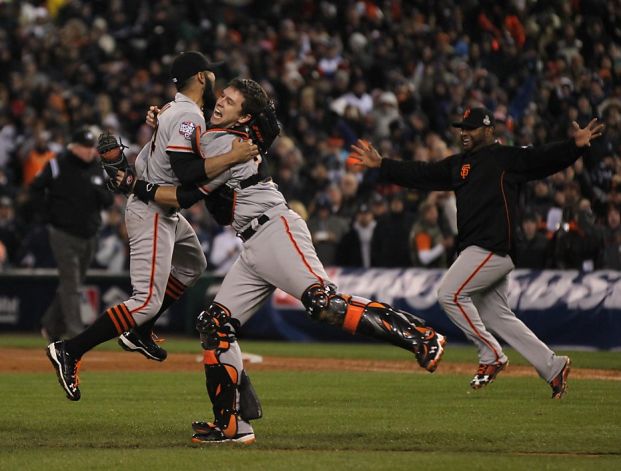
Ah, that is the question: what IS up with baseball? All the ‘usual suspects’ returned from last year to take early leads in their division. Thus far, with 1/3 of the season gone, it appears that we’ll have a repeat of the duels staged last year on the way to the World Series.

But gee whiz – doesn’t that seem vague and – oh, I don’t know – SUBJECTIVE?

In consultation with Michael the Magnificent, I have hit on an idea that just makes a whole bunch of sense. What idea is that, you eagerly ask? Well, I’ll ‘splain it to ja.

He will be coming down next weekend, loaded with lots of data on how the teams have performed thus far. We will take that data and – together – we will develop single point charts. Say, what? 517r36r5kTL._AA160_ Single point charts – google it…you will see.

Well, never mind that – golly gee whiz, I seem to know something others are oblivious to. So let me try to tell you what it is.

A single point chart is one that depicts the average performance of an entity in a given time frame. Boy, that clears it up big time, right? OK, smarty pants, let me try again. Let’s say you want to predict what a stock will sell for in 90 days’ time. Assuming no major upsets – cancellation of the dividend, or an overall crash, you can look at its past performance for say the last 45 days and develop an average. OK, so? You can also determine a range of values, from a low to a high, based on the standard deviation of price change from one day to the next. What good is that? It’s good for predicting upside and downside risk, for one. For another, it’s useful in things like predicting a budget for future expenditures.

OK – what does this have to do with baseball? As I mentioned above, the same teams that won their divisions last year are in first or second place this year in those same divisions. Does this past performance necessarily determine that they’ll make the play offs? That’s why we want to try to predict. And if we can predict that – we can likely predict how the whole thing will turn out, based on current performance.

But baseball wouldn’t be very interesting if you could predict the winner with only 1/3 of the season gone, right? Things change daily for all the teams. But that’s the real advantage to this. Based on when the lines cross the upper and lower limits, you can say that something has changed in the process. A new player that is adding energy to the team? Line likely goes up. A lot of key players might be injured? Line goes down.

As you get more data, the significance of the slopes become more evident. The real test will be after the division winners are declared. Can we use the charts to predict the SF Giants World SeriesWorld Series winner? If it works, Michael will certainly have some interesting columns for his baseball blog. Check it out:bhc-header-transparent3

http://www.baseballhotcorner.com

Click on contributors and look for GetAttachment3-150x111Michael Theed. He’s a wonderful writer and I hope to add to his skill base in accurate predicting outcomes! We shall see…

Gone with the Wind

gone girl cover No really – don’t click to look inside…

Gone Girl is the BAM book of the month for May. BAM is the now nearly three year old book group, Books at Millstone. That’s the group of women who meet monthly in my development to read and discuss books that were read the previous month.

The individual that chose this book earlier this week sent out an e-mail to the rest of us, warning about some issues with language (the “F” word) and activity (sexual in nature). She was just beginning to read the book, and had already sensed this might be a problem. This is because a pastors wifepastor’s wife attended the book club meeting last month when we covered The Night Circus. The book’s sponsor was concerned that the writing would be too risque for the group, given this new member.

Last night we had the April meeting to discuss the story of Henry Flagler’s ill-fated attempt to build the railroad to Key West, brought to life in Last Train to Paradise. The May book recommender reiterated her concern about the nature of Gone Girl‘s writing. Another member said she’d read the entire book and while yes, there was that inappropriate (?) language and activity, it wasn’t really that terribly bad. A few others chimed in to say they thought they could handle it. And since the pastor’s wife was a ‘no-show’ last night, maybe we could risk it. (Note my illustration for the pastor’s wife: not all are created out of the same cloth…pun intended)

But I’ve already read the book. In fact, I finished the book in two days’ flat. I gave up most of Wednesday night’s sleep to feed my desire to reach the end. As such, inapt language which could potentially offend sensitive eyes notwithstanding, I was hoping they would agree to make it the May book. They did, after a short speech from me about the Gen-X thing. So now I can tell you about the book – sort of a warm up for the May discussion…OK?

Author: Gillian Flynn. Gen X-er. Those born between 1965 and 1980. Called “Gen-X”, per a piece in Time magazine, because they were born between the much larger population of Baby Boomers and Gen Y’s. I have a Gen-X 096son. I have one cusp 972daughter, and one Gen-Y OLYMPUS DIGITAL CAMERAdaughter. How’s that for diversity? I think having this spectrum of children’s ages qualifies me to understand this book maybe in ways others cannot. So here goes…

Start with the description on the inside-left portion of the book jacket. Looks like an Ann Rule-written scott peterson with hair dyeScott Peterson story. Rotten husband gets sick of perfect wife, wants hot girlfriend and kills perfect wife. Being the narcissistic idiot that he is, eventually all is found out – generally through assistance from the doting father – and the reader is satisfied with the bum getting his just desserts after dying his hair and attempting to escape after the girlfriend rats him out.

But wait a sec – cool your jets. This is not at all your typical plot line, as described above.

No, there’s no spoiler alert required here – I won’t disclose much – if anything – of the plot. Why not? Geez, lady, if you say the book was worth staying up all night to finish, why won’t you describe the plot?

Because that would spoil it for you, and because, upon completion of the book, and upon some introspection, that’s not the topic I want to discuss. Hey, it’s my blog – I can do what I want widdit…so just shut the fuck up! (Hey, I’m trying to get you inured to the word so you can handle the language when you read the book…right..)

So I finish the book about 4 am, and my immediate reaction is more about the author than the story. Somewhere – about two-thirds thru – I looked at the back flap to find out about this Gillian Flynn. There are two of them – this one has a hyphen in her website. The other doesn’t, so don’t get confused with the two. This one is Gen-X; the other is clearly Gen-Y. Interesting reality, but not the point so back to it.

If this Gillian is at all representative of Gen-X’ers, oh wow…they are a really nasty bunch. To have thought up the main character – named Amy Elliott Dunne – you more than likely have to possess some of the same characteristics. To quote danacarveygeorgebushDana Carvey doing George H.W. Bush, “scaarrryyy”.

The husband, “Lance” Nick Dunne, isn’t any more likeable than his wife. Amy’s parents are a couple of dipsticks, who have exploited their daughter’s psyche through creating a fictional ‘Amy’ and making a fortune selling books about her as she grew up to adulthood. Nick’s mother is dying of cancer, and Nick’s father has Alzheimer’s, and always was a dick (that’s how he’s described in the book – don’t get all ruffled about this old broad’s bad language).

So here’s the point of my essay – this is the lens through which these unfortunate Gen-X’ers have grown up. That piece in Time magazine is one big whine about boomers’ reflection on the madness of the 60’s, and their younger, Gen-Y siblings’ easy life. So what have you got? Middle child syndrome…never satisfied…somebody always has it better…life is just one great big disappointment. A recipe for murder, you say? A recipe for that and … a recipe for obsession, creative life-role playing to the point of complete destruction and – I’d use the word psychosis, but a walking form of cleverly disguised psychosis.

Whew! Enough – let’s go grab that scary book full of evil and madness…almost as good as The Walking Dead and/or The Vampire Diaries. OK…if you say so.

That’s not what got me. She got me on page 7. Here’s the sentence that did it: “When she spied me lurking there in grubby boxers, my hair in full Heat Miser spike (bold mine), she leaned against the counter and said, ‘Well, hello handsome’.” .

So, you say, what the …? See, I’m working to not say bad words…That was certainly the reaction of the group last night when I told them that was what got me…Of course I had to really stretch my mind to recall the exact phrasing “heat miser hair”, a function of my getting on in age and advanced retirement status. But there it is…what is it? Heat miser hair is a reference to a character from the old Rankin/Bass tv cartoon, yearwithout“The Year Without a Santa Claus”. Came out in 1973. Erik, my Gen’X son, insisted we watch it at Christmas every year for about 3 years after that. How else would I remember? Bet he remembers it; nah. Six TBIs probably erased that slim memory. BTW: here’s 250px-Heatmiser74yearHeat Miser. Get the hair thing?

So that started the thinking about Gen X fiction. Maybe I’ll make a new obsession out of it – just read things on the side of book club assignments to absorb Gen-X fiction to better understand how these abominable creatures came to be. So that’s a topic for a later post…read the book, Goddamit..
Ahead of the Curve

curvepic

This morning’s New York Times has a couple of editorials of interest. The first is from the Editorial Board, commenting on yesterday’s article from the Constitution project, declaring the reality of Bush Administration torture tactics. The second is a contribution from an historian, suggesting that the concern about low birth rates in the U.S. is overblown, and should not be used as justification to loosen immigration standards.

Interesting, eh? Didn’t someone we know write a couple of blogposts about these very topics over the past couple of days? Hmm.., c’est moi, c’est moi as Lancelot sang in Camelot. I am the eggman? I am the walrus? No! I am the diviner of truths to come…

So what that means is I am generally from a couple of days to a few weeks ahead of the curve in public discussion. For example: last August I reminded Barry O that his infatuation with drones would come to tears. What has happened? Ask Rand Paul…

I suggested that the best way for the country to move forward is for Congress and the President to work together. And what have they begun to do (at least the Senate)? Um hm…

So if only I could translate that divination skill to the outcome of horse races and/or foreseeing lottery numbers. But alas, most of this stuff is frankly just common sense. Common sense? A rare commodity these days, but we’re getting better.

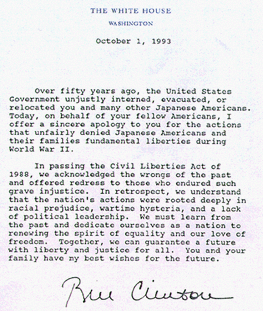
Now back to those editorials. The NY Times Editorial board is just looking for more justification – some classified report written by the cia bullyCIA further documenting abuses. Why? How much verification is needed? They stop short of discussing any potential for prosecution. If they did, the genie would be out of the bottle big-time. Is prosecution inevitable for those evildoers? Not necessarily. The current Administration could go a long way to assuaging the wounds created by the predecessor goon squad. Just as George H.W. Bush and Bill Clinton 4409798apologized to the survivors of Japanese interment camps in World War II, this Administration can and must apologize for excesses committed in the heat of emotion post 9/11. But how is such a thing possible with the continued use of dronedrones? Well, that’s a no brainer. The apology can accompany the statement that armed drones will no longer be used anywhere without specific permission from a host of sources, at the least the host nation and Congress. That would surely send a clear message that may obviate the need for prosecution.

Finally, the historian’s piece about population and immigration. The author is, of course, also hyping a book he wrote, entitled – yep, you guessed it, some title involving the myth of population decrease. I’d be more specific, but having just returned to the online NY Times, the piece is now no longer available. Guess the editors didn’t care for that guy’s shilling his book. Instead, they give us Grover Norquist. Oh, don’t get started with me on that guy!

What’s Happening in Poland?

krakow pic

Can you believe it? I have several registered followers from Poland. So I’m dedicating this post to them, in hopes that they respond – even if in Polish, since it would be interesting to try to translate what they write. That is, if they are in fact readers and not just ordinary spammers, trying to sell me some Polish vodka.

But ever the optimist, I’ll assume they enjoy my snappy repartee, and talk about Poland.

According to a piece from the BBC, there are no less than 13 major daily or weekly newspapers in Poland. I did a quick scan of them, and each had a picture and article about the bomb explosions in Boston. One English language business journal was quick to point out that there were 30 Poles racing in the marathon, but that none of them were injured. Let’s hear it for the home team. Nonetheless, they were all still concerned enough to inform their readers of this incident.

So to some factoids: Poland is a member of the EU, but one that didn’t get caught up in the debt crisis. They are doing just fine, thank you, and expect to continue that way. Further, Poland has contributed troops to both the war in Iraq and Afghanistan. That fact alone is probably making Uncle Joe Stalin roll in his tomb. The very notion of one of the Soviet Social Republics aiding and abetting America in pursuing armed conflict would be enough to make his moustache madly twitch.

Speaking of the wars in Iraq and Afghanistan, that brings me to another topic of interest. A report in today’s New York Times headline reads:

“U.S. Practiced Torture After 9/11, Nonpartisan Review Concludes”

One’s first instinct is to say, Duh! But the authors don’t reach their conclusions with any degree of equivocation. Check this out:

““it is indisputable that the United States engaged in the practice of torture” and that the nation’s highest officials bore ultimate responsibility for it.”

That seems pretty clear, does it not? So the usual suspects,

dick-cheney-waterboarding-shotgun

Georgewbush

rumsfeld

condirice

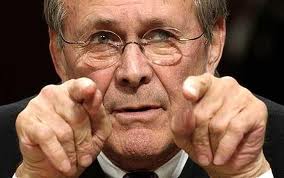
are the ones caught in the crosshairs now. An official document like this one – authored by The Constitution Project, a legal research and advocacy group, is step one in a multistep process that inevitably leads to prosecution. Prosecution? Yes, prosecution for war crimes. Cheney, Bush, Rumsfeld and yes, even little Condi Rice are all war criminals.

Exaggeration? Hmm..let’s go back to the basics. Definition of a war criminal from Dictionary.com:

“war criminal – an offender who violates international law during times of war”

There’s another definition, this one more generic:

“offender, wrongdoer – a person who transgresses moral or civil law”

Moral or civil law. Wrongdoer – remember GWB’s infamous use of the made up word, ‘evildoer’? Things like this often come back to bite..

So is the U.S. Government going to be the one to bring charges? Heck no, because to do so would also point the finger at the current administration for its acts using drone warfare. No, the flying fickle finger of fate (4F’s) will come from an organization such as Amnesty International. Remember PinochetAugusto Pinochet, the Chilean dictator, responsible for thousands of deaths after the junta he led disposed of Salvador Allende? Charges against him were brought decades after he committed them by a Spanish court. The rationale? The principle of universal jurisdiction — that certain crimes are so egregious that they constitute crimes against humanity and can therefore be prosecuted in any court in the world. See where am I going with this?

What would be the effect of such a prosecution, say in the International Criminal Court in the Hague? The same court that prosecuted Liberian strongman charlestaylorCharles Taylor, as well as milosavichSlobodan Milosavich of Serbia. Taylor was convicted and sentenced to fifty years in prison for merely aiding and abetting the civil war in Sierra Leone. His crime? Trading arms for ‘blood diamonds’. That pales in comparison with the Cheney/Bush/Rumsfeld/Rice crimes, dontcha know. And Slobo? He died of a heart attack before he was convicted, thus ending the trial.

I have always believed that the Cheney Administration should be prosecuted for war crimes. To do so would not only punish wrong doing, but also send a message to the rest of the world that America can be held accountable for its acts. Right now there is no other nation strong enough to compete with the United States. We have a schizophrenic notion of ourselves as world protectors/aggressors. At some point, we will pay for our sins and crimes in far off lands. But in the short term, if I were Dick, George, Donnie or Condi, I’d be real hesitant to travel outside the 4 corners of the good old U.S. of A. You never know who might be waiting with a warrantwarrant and handcuffs4 sets of handcuffs.

The Law of Unintended Consequences

consequences

How many times have you heard people say, “Gee – I didn’t know that would happen!” That’s a result of the law of unintended consequences.

Take simple examples from everyday life: you punish your child for not completing their not doing homeworkhomework by sending them to their room to ‘think about it’. What happens” They promptly start playing child playing video gamesvideo games and ‘forget’ to do their homework again. Law of unintended consequences.

How about a set of problems on a bigger scale – e.g. stringent regulations? After the Exxon ValdezExxon Valdez, the federal government changed the rules of the game, and made the law one of unlimited liability for ship owners that create environmental damage. The result? Companies no longer used their own fleet, and switched to fly-by-night outfits with iffy insurance likely to declare bankruptcy if a problem occurred. This is a much bigger, costlier example of the law of unintended consequences. Too much regulation ends up costing more when compared with reasonable regulations and the power of social media to ‘persuade’ companies to do the right thing.

Onto a bigger, pervasive problem of wage deflation that has been occurring for the past twenty years. One of the effects of globalization has been to give multinational companies the ability to move production overseas to wherever labor costs were lowest. This ultimately benefitted the consumer in terms of price reductions. But the consumer is also the wage earner – except for the 1% – so in reality nothing was gained because of reduced ability to buy. Lower wages, I would argue, in large measure contributed to the borrowing binge from consumers attempting to keep their lifestyles on par with the past. They used the alleged equity in their homes to finance that which they could not purchase due to lower wages. We all know how that turned out. That equity wasn’t really there, and when the debt bubble burst, taxpayers ended up footing the bill. Taxpayers? Aren’t those the same people we were just talking about – workers, and consumers? Yes, indeed. How is this possible?

Taxpayers bailed out the banks, not the individual consumer. The individual consumer had to do a short sale or was foreclosed on. For those that used the home like a credit card, I guess you could say they got what they deserved. But the individual that lost their job and therefore couldn’t make the mortgage payments because of the bursting debt bubble? I’m not sure they fall into the same category.

After two decades of wage deflation, a large portion of the population has given up on trying to work. They went through their unemployment benefits and when those ran out, filed for and got disability, food stamps and medicaid. Families in this situation do not live hog‘high on the hog’. They pretty much just get by each month and survive to the best of their ability. They don’t buy flat screen TVs and they don’t eat at fancy restaurants. This kind of behavior is not at all stimulative to the economy, and in large measure explains why the so-called ‘recovery’ has been so prolonged in the U.S.

But things are fixing to change. Why? Two important reasons: fracking FRACKING

and demographicsDEMOGRAPHICS

OK, you say, I’ll bite: what’s fracking?

Here it is from Investopedia:

Definition of ‘Fracking’
A slang term for hydraulic fracturing. Fracking refers to the procedure of creating fractures in rocks and rock formations by injecting fluid into cracks to force them further open. The larger fissures allow more oil and gas to flow out of the formation and into the wellbore, from where it can be extracted. Fracking has resulted in many oil and gas wells attaining a state of economic viability, due to the level of extraction that can be reached

OK, what is the benefit of this?

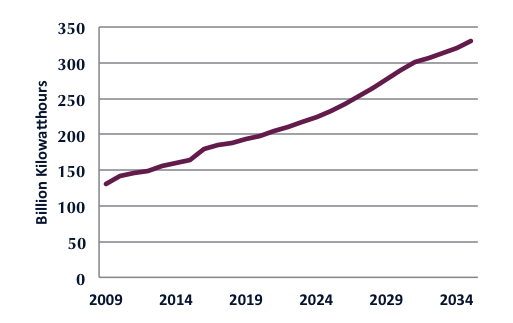
The benefit is in the availability of large quantities of natural gas used in industrial production. Here’s a graphic showing the projected increase in the use of natural gas by industry in the next couple of decades:

projected-natural-gas-consumption5 That’s a lot of gas.

The chickens are coming home to roost. Companies that left the U.S. years ago for China are now coming back and will soon be looking for skilled workers. Why? Natural gas prices in the U.S. – thanks to this new technology and midwest discoveries of natural gas – are 5 to 7 times cheaper than the price in Europe and Asia. Natural gas is hard to transport across the ocean because of special shipping needs. As such, that cost has to be factored in. Russia supplies Europe, and because energy is really their only source of income, when they need more money they just up the price. If Europe complains, Russia just shuts off the pipe. Good for stability, eh?

What about demographics? China is running out of blue collar workers, and the ones that exist are now being paid higher wages. Moving to Thailand or Vietnam just prolongs the inevitable, because of the same factors that have suppressed the availability of workers in China. Japan is trying a ‘hail Mary” strategy to solve its economic woes. The European Union is, for all intents and purposes, in a depression.

So back to the US – where will these companies find these skilled workers? Demographics are causing an aging population to retire early, or – as indicated above – quit the system and live a subsistence life. Cuts in education funding have eliminated many if not all of the technical programs industry needs to find these workers. The net result?

Aha! The law of unintended consequences. cartoon of illegalsImmigration that took a huge nose dive after 9/11 will be the ultimate salvation of industry. Arizona’s legislation that empowered law enforcement to determine anyone’s immigration status left a big hole in that state’s agricultural work force. Same thing happened in Alabama. All of a sudden legislatures started being asked not to get involved by large agribusinesses. You won’t see that legislation in Florida.

Skilled and unskilled workers will be available from Mexico and Latin America, which still have healthy population increases because of their Catholic institutions. Americans left out of this resurgence from lack of skills or motivation will decry this unintended consequence. But it’s inevitable. And I believe this reality will be a first, big step in the recovery of America’s reputation as the place to go if you want decent employment. Too bad a whole generation of workers had to suffer before that reality came to pass.

Abe-nomics: Is That Like Abe-Normal?

Marty Feldman

I’m BBBAACCKKK!

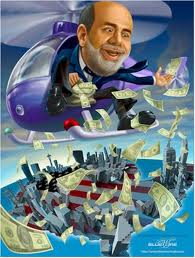
Let’s talk about EDIT660-AbenomicsRx-870x396 Abenomics. You surely know from previous posts that Shinzo Abe (spelled with either an “e” or an “i” in his first name – take your pick) has created a very different economic rubric (love that word! also ref: protocol) for Japan. The government is spending over 7.5 trillion yen a month to flood the country with yen and effectively devalue their pre-existing debt. Ref: Helicopter Ben’s QE-infinity.

Why did he do this? Deflation has been a nagging problem in Japan for two decades. While deflation is good for old folks, it hasn’t been good for the next generation – the last generation that stands between the old folks and destitution. Abe’s obviously gotten a new financial guru to say that this is not sustainable, and that Shinzo must buck the system and change the economic climate in Japan. With much fanfare, the Abe government announced these plans, and then strong-armed the Bank of Japan into cooperating with this strategy.

What’s the result of this? The Nikkei Dow has risen from around 8500 in late October to over 13,000 today. At the rate it’s increasing, it will surpass the all-time-high Dow Jones Industrial average within the next 6 months – maybe earlier. Is that a good thing? Depends on who you ask…

Old timers like George Soros hate the concept and he predicts a dire end. I begin to think that if you make George Soros unhappy, you’re probably on the right track, as he benefits from government stupidity. Others – like my favorite columnist Ambrose E-P, says that Abenomics is the only alternative for Japan. So only time will tell who is right and who is not!

Where did Shinzo get this idea – did he invent it? Nay, nay – his financial guru obviously followed the work of Korekiyo Takahashi Korekiyo Takahashi, the Finance Minister of Japan from 1927 until his death at the hands of young military officers in 1936. Those officers assassinated Takahashi for cutting the military budget. Cardinal sin when you have plans for global domination, eh?

Takahashi dealt with the Great Depression by flooding Japan with yen. The resulting boom in business increased tax revenues and saved Japan from the misery inflicted on the rest of the world, which insisted on sticking to the gold standard. That is effectively what Abe believes will occur as a result of his administration’s actions. Apparently stock market investors agree with him – otherwise why would the Nikkei have nearly doubled in the past 6 months? According to AEP, it takes two to four years for the full effects of this type of easing to be fully felt. It took three years for Takahashi to succeed in his gamble.

So for the thousandth time you ask: what the devil does this have to do with anything? Why, oh why are you so obsessed with the topic of Asian economics?

My somewhat vague responses in the past have been about global village and what affects the rest of the world affects us. You never really liked that answer, didja? OK, so why else, you query? Well, to be perfectly candid, it’s a question of trust.

Trust? Yup, or better phrased: who do you trust?

It’s easier to say who I don’t trust in matters relative to American economics: just about everybody. Nobody is immune from spin these days. You cannot read anything without wondering which side of the political divide the author represents. Alternatively, you wonder, who are they shilling for? So with all the information available on the internet, where can you go for the straight scoop? Nowhere. So what do you do? I rely on a couple of authors – you know who they are – to tell me what I want to know, and then – by extrapolation – I can assess the situation for the U S of A. A bit tortured, somewhat oblique, but hey – that’s me…

OK, you respond – so extrapolate away! What’s new & different? You say buy a couple houses – check. You say grow a garden because inflation will affect food prices, check. Is that all there is?

Aha – back to soothsayer status…get that pic out… 6a00d834518c6c69e200e54f8772e38834-640wi okay – new Oraclular predictions…

Here goes. First some facts: The Dow is at an all time high. Unemployment is dropping, albeit slowly. Core inflation is running at about 2%, so nothing to be concerned about there. Washington is beginning to work together to solve the nation’s problems of gun violence and immigration. All good so far. But what about things that aren’t so good? While shipping stocks are up, they’re still off by ‘normal’ standards by 70 or 80%. The Baltic Exchange Dry Index is rising, but still stands at less than a thousand. Commodity prices are dropping – including gold. So what does all this add up to?

Here it comes: nothing. The next couple of years – thru spring of 2015 – we’re gonna just bump along. We’ll have a few ups and a few downs, but nothing substantial. The economy will slowly begin to pull itself up and become sustainable. Sorry to be so dull, but actually – that’s really good news! Because the European Community will not be calm at all. TheEU pic EU will suffer mightily in the same time frame, on their way to a big blowup with hard feelings and recriminations all around. In my humble opinion, the next serious world-wide conflagration will arise from the misery inflicted by this experiment-gone-bad called the European Union. Rest in peace, Margaret ThatcherMaggie Thatcher. You were right all along. But as with most people who are right (Abe Lincoln, Mahatma Ghandi, Korekiyo Takahashi) you are punished for being a strong leader in your lifetime. So expect to see lots of unhappiness coming from the EU due to lack of that kind of leadership. But when a leader does emerge – watch out…Think Adolph Hitler, Benito Mussolini and Tojo…war is not going to be small or pretty, but it is inevitable. And when it occurs, who will be the big winners? US & ChinaThe U.S. and China…you heard it here first.

The Godzilla Solution


Sometimes I think the way powers-that-be in the world deal with today’s economic problems is so interesting. It kind of reminds me of the plot lines of those horror movies of the 50’s, post Atomic blast in Japan. Remember Godzilla? The Thing? The plot was nearly always the same: all is well, men & women working & playing together, seemingly oblivious to the dangers that lurked in the sea or on the other side of that door! After the monster appeared, government reps got together to talk about it – mostly by waving their arms and shouting. Then the army was called out to destroy the monster – and there was the rub. How? Nobody knew, so they just blasted at it. Sometimes that worked (almost never); sometimes it made the critter even stronger (oh my!) But in the end, by some fluke – or by listening to some curly-haired scientist – the monster was done away with by, say another monster, or a CO2 Extinguisher (cold) – or more often by some deus ex machina when they got to the end of the reel.

So isn’t that how world leaders of all the developed and developing nations have dealt with the economic downturn?

Everybody did it ‘their way’ and said ‘their way’ was best. But all their solutions accomplished as much as the army blasting Godzilla – it either made the problem go away temporarily (judging by all the sequels, clearly they didn’t kill the monster) or they made it worse.

Or how about … doo doo, doo doo, doo doo… the monster shark in Jaws? The best and most comparable element in that plot line was this one: “the problem has gone away, it’s now safe to go back in the water”. This came from the corrupt Mayor, artfully and smarmily portrayed by Murray Hamilton. But you knew by looking into his eyes he wasn’t telling the truth.

What’s a sheriff to do?

What prompted this post was my thinking that our current ‘situation’ is a confluence of major shifts in world dynamics. What major shifts are those? There are three:

Real estate bubbles
China’s joining the World Trade Organization in 2001, and
Demographics

OK, you say, I’ll bite – please ‘splain.

Let’s start with the last one – demographics. Around the world, not just in the US, birth rates skyrocketed at the end of the Second World War. The ‘baby boom generation’ lasted from 1945 to 1953. Birth control began to be available on a truly large scale starting in the 1970’s, along with legalized abortion via Roe v Wade in 1973. China’s ‘one child policy’ began in 1979. The net effect of these monumental changes was a significant reduction in the birth rate across the developed and parts of the developing world. The overall ‘crude’ birth rate in the world has been cut in half since 1950.

So what is the result? Fewer workers in the workplace, since the ‘boomers’ are retiring at an increasing rate. The impact? Varies, depending on the location. In xenophobic countries like Japan, with no workers adding to government revenues, it’s a killer. In China, it makes the export growth model no longer viable, because they are beginning to run out of blue collar workers. The solution is reforms to encourage innovation, and an end to widespread, local government corruption. In the U.S.? Hello, immigrants! We love you…! Not so fast…John McCain’s town hall meeting the other day put the kibosh on that notion!

China’s joining the World Trade Organization reduced tariffs on its goods. Deng Xiaoping’s hand chosen successor Jiang Zemin continued his reforms, decreasing the number of state-owned enterprises by nearly half. These changes propelled the Chinese economy, and in 2010, China became the second largest world economy. But all was not well: a lot of change occurred in a relatively short period of time, with a lot of state-owned enterprise workers laid off. Hold that thought for a bit.

Finally real estate bubbles. Here we are again with the refrain: What’s inflation? Too many dollars chasing too few goods. Thank you, Emily. The growth in the Chinese economy with no consumer goods to spend it on in-country led to the Chinese flooding the US with money, effectively buying up as much debt as we were willing to issue. All those dollars had to go somewhere, and the somewhere was in real estate. From 2001 to 2005, a huge real estate bubble occurred, not only in the U.S. but in China as well. In fact, according to the latest post from Andy Xie, China has been dealing with this issue for the past two decades. The net effect is an effective lowering of the standard of living for citizens in the US and China. The difference, however, is in mortgages. In China, it’s relatively rare to purchase real estate with a mortgage: people must pay cash. So there wasn’t the big crash in their government-owned banks that was experienced in the U.S. when households could no longer sustain the debt load. This became particularly so in late 2007 when unemployment began to significantly increase. The other major difference is that nearly all the property in China is owned by the government. The way local governments have survived, first reforms and then the downturn was to sell real estate, or develop it themselves. Since the export growth model is no longer effective, they’re living off the bubble. You know that isn’t sustainable.

So what about any real good solutions?

Like the monster movies, everybody has the right answer, but have any of them really been effective? I’d say not really. Why?

Primarily because the world has not come together in a coordinated, concerted effort to resolve the economic issues that have occurred as a result of those three afore-mentioned realities.

So Great Britain’s answer is like the Tea Party’s, but worse: cut spending and raise taxes. They cut government spending to the bone. However, with the economic downturn and high unemployment, tax revenue decreased. In order to keep things afloat, their debt has increased significantly since 2007. Result? Incipient inflation, so much so that the world’s economic advisors are steering their clients away from British “Gilts” (like our treasury bonds). They will inflate their debt away, to the detriment of their citizenry. So thank goodness we didn’t listen to the Brits!

Then there’s China’s solution. We’ve talked about the need for a continuation of reform in previous posts. Reform stopped in 2005 with the change in government because of the fear of social instability with the advent of widespread use of the internet. China is living off Fixed Asset Investment. That is akin to all of us refinancing our houses every year from 2001 to 2005 and living off the proceeds. You know you did, as did we. You know how that ends. It’s that musical chairs thing again. Social instability? They ain’t seen nuthin’ yet.

The European Union and the U.S. just keep doing the Murray Hamilton number: it’s all good now, there are no real problems, it’ll all work out in time. Kick that can down the road, will ya? Not the way, either.

So if I were in charge, what would I do? Well, it’s been done before, at Bretton Woods after World War II. George Marshall got the world leaders together to agree on a way to manage the world’s currency in the aftermath of a devastated Europe and Japan. The solution was simple: the dollar would become the world currency, and would be convertible to gold upon demand. That worked well until 1971, when war expenses caused Nixon to renege on the deal. Since then we’ve had fiat currency. Fiat currency – nothing backing up those little pieces of paper – will inevitably lead to ruin, because we just keep printing more of the little darlings. The end result? Yes, say it again: INFLATION!!!

The only solution is to return to the gold standard, or some other agreed-upon mechanism. This will cause pain in the short term for a long term benefit. But will we do that? Not likely. Governments have been buying massive quantities of gold, to avoid getting caught short with devalued currencies in their accounts. This, in turn, has greatly upped the price of gold.

So it’s everyone for themselves. Godzilla the monster is coming – not a question of whether, just when and where and to what extent. My quick and dirty solution? Buy two houses as soon as possible: one to keep until you die, and one to sell at inflated prices to live on ’til the end.

Or, run for your lives!

movie monster


Been a While

Hey, Faithful Readers –

Been a while since the last post – been busy with family matters. But I’m back, frankly trying to figure out what is happening in the not-too-distant future of the investment/financial world.

Reading the latest post on Caixin Online from Andy Xie, he who stays a couple of weeks ahead of everybody else with his writing…

the latest is relatively hard to digest, so bear with me while I ramble a bit or just try to parse things out. As always, I try to take global stuff and break it down into bite sized pieces and then translate it to common sense language. Thus far, it’s been pretty straightforward, but now it’s getting into the complex world of currencies.

Here’s Andy’s latest:

http://english.caixin.com/2013-02-04/100489386.html

The title is “The Consequences of a Strong Dollar”…

Andy reviews the history of bull markets, which have numbered exactly 2 in the last 40 years or so. The first was a reaction to Paul Volcker’s raising interest rates to 18% to finally break the back of chronic inflation. It worked. I remember buying a five piece place setting of Wedgwood Runnymede Dark blue in 1983 for the amazingly low price (at the time) of $118. Recall this was before Ebay and such, where you had to order direct from Great Britain and the currency changes made for a 30% reduction in the price. I still have that place setting, by the way…

The second bull market for international currency to rush into dollars was in the 90’s with the IT/web revolution going on here, but apparently no where else in the world (who can remember from so long ago?) Of course, that ‘bubble’ had to end, which it did at the beginning of the new millenium…lots of tech companies didn’t survive and got flushed down the drain. Remember etoys.com? Hey – they got reinvented and exist again! Who knew? I know…get on with it!

Andy goes on in the next section to assert that the dollar has been “in a bear market” 70% of the time since the early 1970’s. What does it mean for the dollar to be in a bear market? It means that, relative to other currencies, the dollar is not increasing in value, but rather decreasing, albeit slowly most of the time. OK – what does that mean for me and my wallet? Not much, unless you’re a farmer and export your wheat to Outer Mongolia. OK…so why are we talking about this? Hey, I’m getting to that…keep your shirt on!

Some more factoids: it was Richard Nixon – your and my favorite president of all time (not) that ‘unpegged’ the dollar from a gold standard. Why’d he do that? Those of us around in the 70’s remember going to the grocery store and seeing the price of meat gain 15 or 20 cents a pound in price, frankly at a time when that was a significant increase. Nixon had an inflation problem (Emily: what’s inflation? Recite, please: “inflation is too many dollars chasing too few goods.”) Correct! Geez, this is draggin’ on…

Listen, I’ll provide a synopsis of that period of time later. Here’s the gist of what Andy is saying here: Pay attention – here it comes:

A strengthening dollar will draw investment from around the world. As it’s a zero sum game, those investments have to be converted from yen, Euros, rubles or Bahts (Thai money). The outflow of money from those other economies will have varying effects. From the established economies (the Euro)? A stronger dollar will probably help them, as they are in a vicious cycle caused by the disparity in wealth between the north and south. But the emerging economies, and Asia? The emerging economies (BRIC – Brazil, Russia, India and China) will likely be most affected. Thailand already went thru its crisis in the late 90’s, and acquired gold instead of lots of foreign currencies to help itself survive the next round of musical chairs. But the emerging economies will be hit the hardest. Why? They’ve been enjoying big growth and now that growth will slow. So their growth slows? Remember, gentle readers: the world is now a global village, and what happens elsewhere eventually affects us all.

So where will all this end? As usual, it’s too soon to tell. But I can and will say this: anyway you slice it, inflation will become a reality within the next 18 to 24 months. When it does become a reality, things will quickly change for everybody, but in particular for retirees on fixed incomes. So what should one do if one is in that situation? Buy stuff now, before it’s too expensive later. Buy another house – one to keep and one to pay off with the proceeds from the one you sell. Hunker down and grow a garden, because everything will begin to be veeerrrryyy expensive…Ciao~!

Andie Xie’s at It Again

My two favorite columnists are Ambrose Evans-Pritchard and Andy Xie. OK – say it – NERD!

Yes, indeed, I readily confess: I am an economics nerd.

Why?

Because it’s what is the most interesting and impactful area of discussion around today.

Not politics?

Nah – we won.

Not the war(s)?

Nah – Afghanistan will be over in the next 6 months (mark my words!). Obama has let us all know that the ‘discussion’ about the timetable for troop withdrawal is being moved up. What does that translate to? We know the war is unwinnable, and we’re getting the flock out. And Iraq? A distant and unfortunate memory.

You won’t see us involved with boots on the ground any time within the remainder of this century, even when the Republicans retake the White House in 2016 – not gonna happen.

So why economics?

There are three reasons why economics is important to me right now:

1) I just retired, and money is going to be an issue for the next 4 years or so until I go back to work at 66;

2) Economics is driving the world stage right now, as you can tell from my posts on the topic (e.g. the new Hitler rising); and

3) With Emily and my investing in the stock market, it renewed my interest in things economic, that had lain dormant for many years post-1987 when I quite investing myself.

So – having said all that – what about Andy Xie?

Andy just wrote a wonderful post (aren’t they all) about the effect of the Fed and China’s monetary policy. The title of it is: “Money Cannot Buy Growth”.

And what, exactly, did Andy say?

Well, here’s the deal. The statement “money can’t buy growth” reflects the reality of how the U.S. and China have dealt with the economic slowdown. Both countries have tried massive amounts of liquidity thrust into the economy in order to stimulate growth. Did it work? Well, that’s a good question: compared to what? How would things have been without that massive injection of liquidity? That’s difficult to say.

But that’s not the point of his article. It is an agreed-to premise by every economist (except maybe “Republican” economists – whatever they are) that all this money chasing fewer and fewer goods will lead to that old bugaboo – inflation.

What’s that?

Good question! We certainly haven’t worried about it for the past 4 years. The Japanese haven’t worried about it in 20 years! So you have to reflect back on the 70’s to recall what came to be called “stagflation” – a stagnant economy infected with the plague known as inflation.

So what’s the big deal?

Inflation – simply defined as mentioned above – is too many dollars chasing too few goods. Why hasn’t it infected us before? Per Andy, two reasons:

1) As more money entered the system, China cranked up the manufacturing capacity, so the ‘too few goods’ never came to pass; and

2) A lot of that money went – contrary to the Fed’s intent – not into buying ‘stuff’ but into paying down egregious debt on the part of Americans.

So does that mean inflation is in our future? Yes, most definitely. Everybody agrees – just a question of when.

Some say 2014 – I say we won’t begin to see any big changes until 2015. Why? The Fed has as its target not inflation, per se, but employment. When unemployment gets below 7.5%, then they will ease up on the QE-infinity and begin to raise interest rates.

OK, again – so? With the population so used to low interest rates, the slightest increase will be met with concern – nay, likely panic. Anything that raises the cost of debt is bad, right?

Double edged sword…but let’s get to the good part of his advice.

So if money won’t buy growth, what will? This is the cool part.

He says lowering the cost of these three things is the answer to growth stimulation in America:

Housing
Health Care
Education

Interesting, and somewhat counter-intuitive, eh? Housing – low interest rates, but costs on the rise. Likely to happen? Nah…Government could make it a whole lot easier for folks to buy a house. Still plenty of inventory left – ?

Health Care? Obamacare! Supposed to reduce the cost of health care – only with cooperation from the states – remains to be seen…

Education

That’s important – get those kids going to college that can’t afford it now or must take on massive debt to get that degree and then not have a job – road to nowhere? That’s a myth that must be overcome.

Interesting notion – even Andy says not likely to happen quickly as too many vested interests to overcome.

We’ll see…

So I’m taking a 3 year hiatus to learn a new skill and then back to work. Why? By the time I’m 66, Emily will be 13 and will have no interest whatsoever in hanging out with Grandma. So why not find another work life? That which I enjoy the most is spending time with her and without that – need to go back to work.

Oh, Andy talks about that too – the beginning of the end for white collar workers in this country. Their jobs will be exported around the globe. So what happens? Folk like me take the pension instead of working for peanuts. So what’s the answer? That’s what Michael Theed and I need to figure out!

Later…

More Abbey

Third episode last night – pretty slow, but as a result of some burned toast, I have discovered

TA DA! TUMBLR!

What a nifty invention – there was a whole bunch of posts relative to Mrs. Hughes’ burning some toast in her room…but this was the best thing on there – made me laugh out loud!

Gotta watch the show to get it…if you watch, enjoy the humor~!